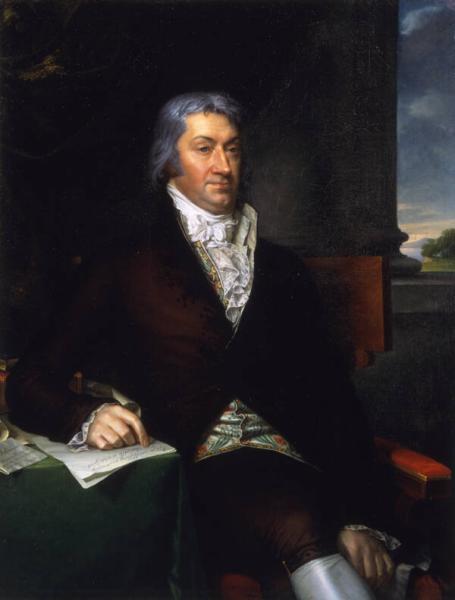
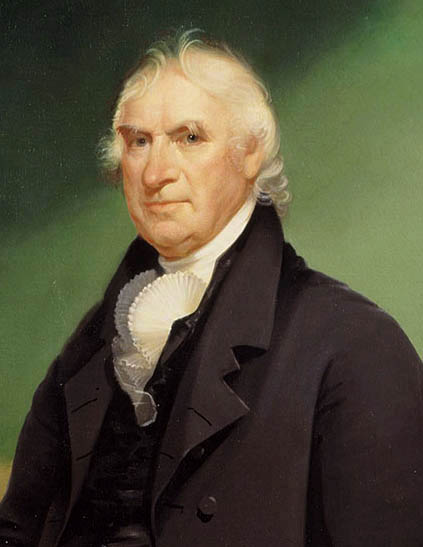
After the Constitutional Convention created the new constitution in 1787 it was up to the states to ratify the document so that it could be put into effect. They had decided that once nine states had ratified the document it would become the law of the land. By the time the New York Convention met to debate ratification eight states had ratified the constitution. The nation and the world watched what would happen in Poughkeepsie with bated breath. There were 19 Federalists including the Chancellor, John Jay and Alexander Hamilton who faced an uphill battle of getting some of the 40 antifederalists to change their votes to ratify. Governor George Clinton was among the leaders of the Antifederalist movement.
Debates began in earnest on June 19, 1788. After such formalities as calling the Convention into a committee of the whole and choosing a president, George Clinton and a chairman were done Robert R. Livingston spoke for over an hour. I won’t publish the speech word for word, in part because Francis Childs, who was recording the speeches in shorthand, gave up putting down what the Chancellor said verbatim and started to summarize part way through the speech.
But in the coming days newspapers would be awash with reports of the speech. On June 23rd the New York Daily Advertiser reported: “On Thursday last in the Convention of this state, Mr. Chancellor Livingston, in a committee of the whole, made a most excellent speech of the necessity of an union between this state and the United States” The article went on “he recommended in the house, in strong terms, coolness and condor in the discussion of the Constitution.”
Within days this article was published in Pennsylvania Packet, the Middlesex Gazette (CT.), the Massachusetts Centinel, and the New Hampshire Spy. [i]
The New York Journal published an anonymous letter on 23 June 1788 that read in part “Yesterday the Chancellor made the opening speech, The great object of which were to shew the defects of the general government and the necessity therefore, of a new one…” This was reprinted in New Jersey, Pennsylvania, Virginia, and South Carolina. [ii] This article also shows how well-known Livingston was, that a paper in South Carolina could simply say “the Chancellor” and people would know who was speaking is something not to be ignored. Few men garnered this kind of name recognition.
Of course, papers had their own political leanings. The New York Daily Advertiser was a rabidly Federalist paper. On June 28, 1788 they published on one of the Chancellor’s speeches: “After him rose the Chancellor, who spoke charmingly indeed. He let his fancy rove unchecked and such bold and figurative language I before had never heard. The house was perfect silence-the eyes and mouths of every man were fixed and open-and his eloquence, like a river which had been abridged for a long time, burst forth irresistibly. When he first rose his eyes bespoke passion, his countenance indicated an injury received and it required no great sagacity to pronounce him as a speaker in quest of revenge.” Later it went on he was delicately pleasing, nut in speaking of his ambition, the greatness of his mind and the virtues of his soul shone brilliantly splendid and even his enemies who would feign to be blind to his talents; could not but view his virtues with envy and admiration.”[iii]
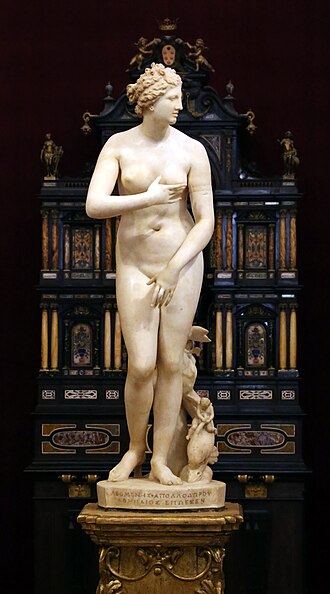
A response came quickly from the Antifederalist New York Journal. They published the same article as the Advertiser but with emphasis on different words and some notes on the text. For instance when the letter tells of how every man was fixated on the Chancellor’s speech the Journal adds the note “Oh! What a sweet little enchanting body the chancellor is! The gods adore him-he has more power over our sex than the statue of Venus de Medicis- how astonishing it is that the audience, with their open mouths, had not have eaten him up in their fit of love and transport:-his cunning and sagacity is so exquisite , that he could smile in his neighbor’s face and run him through the body at the same time, out kind and most sagacious REVENG”[iv]
Clearly both articles run to the absurd, like many news outlets today. It also fits the chancellor well, who became known for speeches that rook an Anti’s argument and logically extended it to the point that it became ridiculous and an object of laughter from both sides of the convention.
The Advertiser continued its hero worship of the Chancellor throughout the convention. On July 8 they wrote” He (Samuel Jones) was followed by the Chancellor, who, in a fine vein of humor exposed the arguments of the opposition: compared ludicrously the reasoning of one to that of another and placed in the most striking and picturesque point of view the absurdities and contradictions of all. He gave his fine full scope, in sallies that would do honor to Chesterfield or a Courtenay. The bursts of applause he received from every side seemed to add energy to his genius, and his whole speech was a stream of delicate satire and Attic eloquence. Even those who felt most sensibly the lashes of his wit, were captivated with his fancy and were forced to join the general laugh. Not was his address a mere exercise of sportive imagination; his wit served only to give keenness to the edge of his arguments, and to make their impressions irresistible. [v]
To which the New York Journal replied with an article on July 10 that began “The Chancellor has had a second drubbing from G. Livingston, M. Smith and Mr. Williams. In reply to the first the chancellor very elegantly observed that he was particularly surprised and confounded at the attack of his honorable kinsman, over the way, who, regardless of their ties of blood-of their common ancestry-and of their common name had joined the throng in pointing their daggers at his breast; and he could not help exclaiming with Caeser and though too my Brutus.[vi]
Eventually after weeks of debates during which the Chancellor voted against every amendment suggested for the Constitution, New York ratified on July 26 with a very narrow margin of 30 yeas to 27 noes. while they had been debating both New Hampshire and Virginia had ratified the Constitution which changed the debate in New York to one of joining the union or not, and to some how much business would be lost if the capital was moved from New York City.
News of New York’s ratification quickly reached North Carolina and Rhode Island, It was a blow to the holdouts in those states, nevertheless they were able to keep from ratifying until 1789 and 1790 respectively. News also spread to England, France and the rest of the world.
[i] Kaminski, John P. et all editors The Documentary History of the Ratification of the Constitution Volume XXII Ratification of the Constitution by the States New York [4] 2008. p1699-1700
[ii] Ibid 1701
[iii] Ibid 1829-1830
[iv] Ibid 1833-1835
[v] Ibid 2056
[vi] Ibid 2089


Leave a Reply