
Dartes Freres, Pots de Crème set, ca. 1804, porcelain and gold enamel. Clermont State Historic Site.
According to the Livingston family lore, “Chancellor Livingston’s Dinner Set,” which includes approximately 60 pieces, was brought back by the Chancellor from Paris, France around 1805 at the end of his diplomatic tenure as the Minister to France. Select pieces of this service are displayed in Clermont’s dining room, including an ice cream urn decorated with gold enamel and floral sprigs of blackberries and foliage. This service is attributed to the French porcelain manufacturer Dartes Freres, or the Dartes Brothers, which operated from around 1795 to 1833 and were known for their dessert services. This holiday season part of the Chancellor’s service, the pot de crème set, is displayed on Clermont’s dining room table offset by festive greenery and decor.
These pots de crème, or custard cups, are made from porcelain and hand painted with bands of gold enamel and include decorative foliage element and a delicate berry finial which tops each lid. Pot de crème cups are generally made in sets and are occasionally accompanied by a footed tray, such as the stand pictured above. Pots de crème, which translates to “pots of cream” or “pots of custard,” appeared in French cuisine during the 17th century and became extremely popular during the 18th and 19th centuries. The custard was either vanilla or chocolate in flavor and eaten out of their delicate cups with a demitasse spoon. The pot de crème cup was developed in the 18th century and was designed with lids in order to keep the creamy dessert it housed fresh. Before its custard dessert application, these lidded cups were used to serve hot broth or gravy and were known as pot a jus. The recipe for simple pots de crème has remained consistent throughout the generations. It includes eggs or egg yolks, cream or milk, sugar, and flavoring – typically chocolate or vanilla. The decadent mixture is baked at a low temperature in a water bath to achieve its signature smooth, creamy texture.
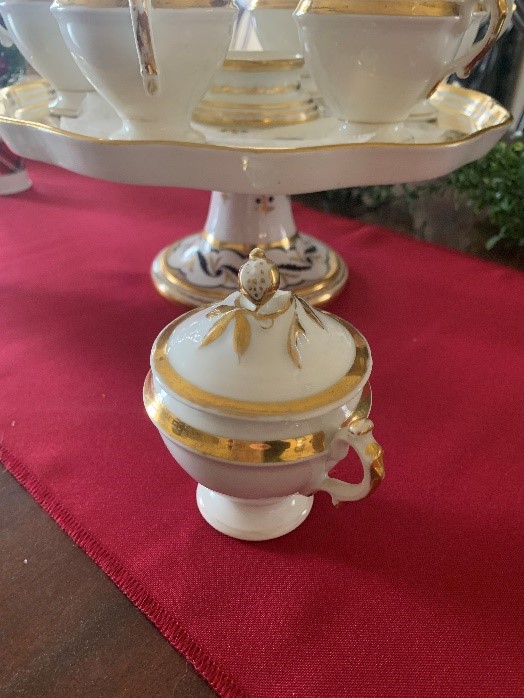
Detail: Dartes Freres, Pots de Crème set, ca. 1804, porcelain and gold enamel. Clermont State Historic Site.
Drinks and sweet dishes such as hot chocolate or syllabub were served in similar cups, though hot chocolate cups are generally distinguished by having two handles while the pot de crème cups are single-handled and always lidded. Although it is mostly likely that this particular set was used for pots de crème, it has been referred to as a hot chocolate service as well as a syllabub set among Clermont staff over the years. Syllabub was a popular English dish from the 16th to the 19th centuries wherein sweet cream or milk was curdled with an acidic addition such as wine or cider. A 1980 Clermont newsletter described the service as a syllabub set which was “used to serve a draft to induce sleep and aid indigestion. Ingredients consisted of warm milk, cream, and ale flavored with lemon, lime, and cinnamon bark.” Used on formal tables in Europe and America during the 18th and 19th centuries, these sets were not only functional but served as a symbol of status and luxury in wealthy, aristocratic families like the Livingstons.
 Clermont State Historic Site
Leave a comment