On December 1, 1822, Charles Goodwin Ridgely married Cornelia Louisiana Livingston in Clermont. Cornelia was the daughter of Margaret Maria Livingston, Chancellor Robert R. Livingston’s granddaughter. This meant that she was one of the most sought-after women in the young country. Marrying into the Livingston family was akin to marrying royalty. So, who was this Ridgely?
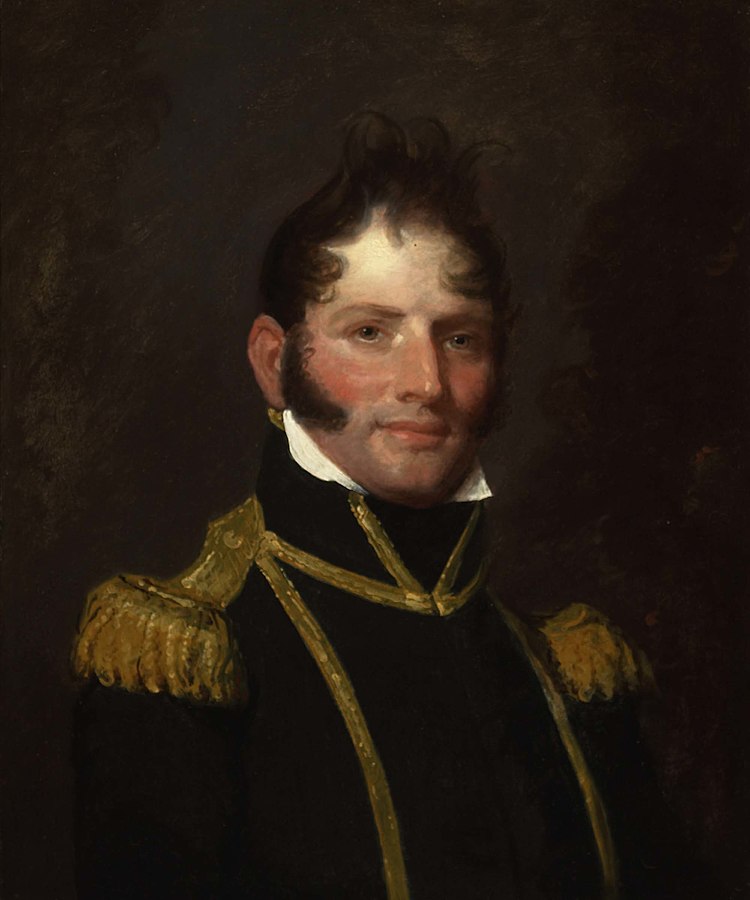
Charles Ridgely Goodwin was born in Baltimore, Maryland on July 2, 1784. His father was a doctor. A wealthy uncle requested that he change his name to Charles Goodwin Ridgely and Charles complied to stay in his uncle’s good graces and will. Ridgley joined the navy as a midshipman, an officer in training, on October 17, 1799, at the age of 15.
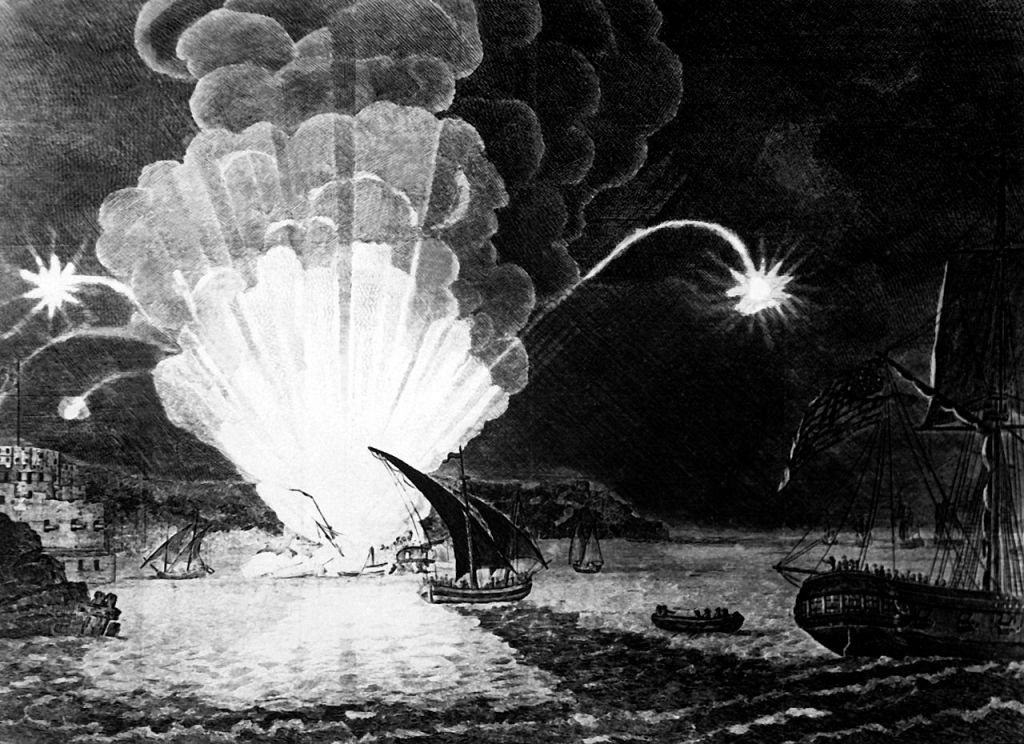
Charles saw combat during The First Barbary War which broke out in 1801. On September 4, 1804, Charles, then stationed on the schooner Nautilus, watched as his captain sailed the Intrepid into Tripoli Harbor. The Intrepid was packed with explosives which the captain hoped to sail up to the wall in Tripoli Harbor, ignite, and then escape before the ship blew up. Something happened aboard the Intrepid that will forever be lost to history and the ship exploded prematurely claiming the lives of the entire crew. For his actions during the Second Battle of Tripoli Harbor, Charles was awarded a gold medal and a sword from Congress.[i]
Commodore Edward Preble promoted Charles to lieutenant. The Nautilus was sent to Messina, Sicily to gather supplies for the fleet. While there Ridgely met a traveling American writer by the name of Washington Irving. One night after a dinner in Messina, Charles was returning to his ship when he saw a group of local men accosting a British sailor. Charles drew his sword and waded into the scrum chasing off the mob.
The mob returned as soon as Charles had left and staved the British sailor to death. They then swore to a man they had seen Charles do it. Charles was forced to stay in Sicily on murder charges when the Nautilus sailed back to the African coast. He missed the Nautilus’s brief encounter with Horatio Nelson’s Victory which would shortly thereafter defeat the French at the Battle of Trafalgar, although Nelson would die during the battle. Charles faced long delays in his trial. The Barbary War ended on June 4, 1805 but Charles was not found not guilty of the murder until September of 1805.[ii]
During the War of 1812, Charles was promoted to master commandant and given command of the Jefferson on Lake Ontario. Charles commanded the ship during a blockade that prevented British supplies from reaching Fort Erie. He later captured several small British vessels on the lake.
Shortly after the War of 1812, Charles was promoted to Captain and given command of the Erie and later the Independence in the Mediterranean fleet. Charles’s mission in both ships was to protect commerce following the end of yet another war with the Barbary states.
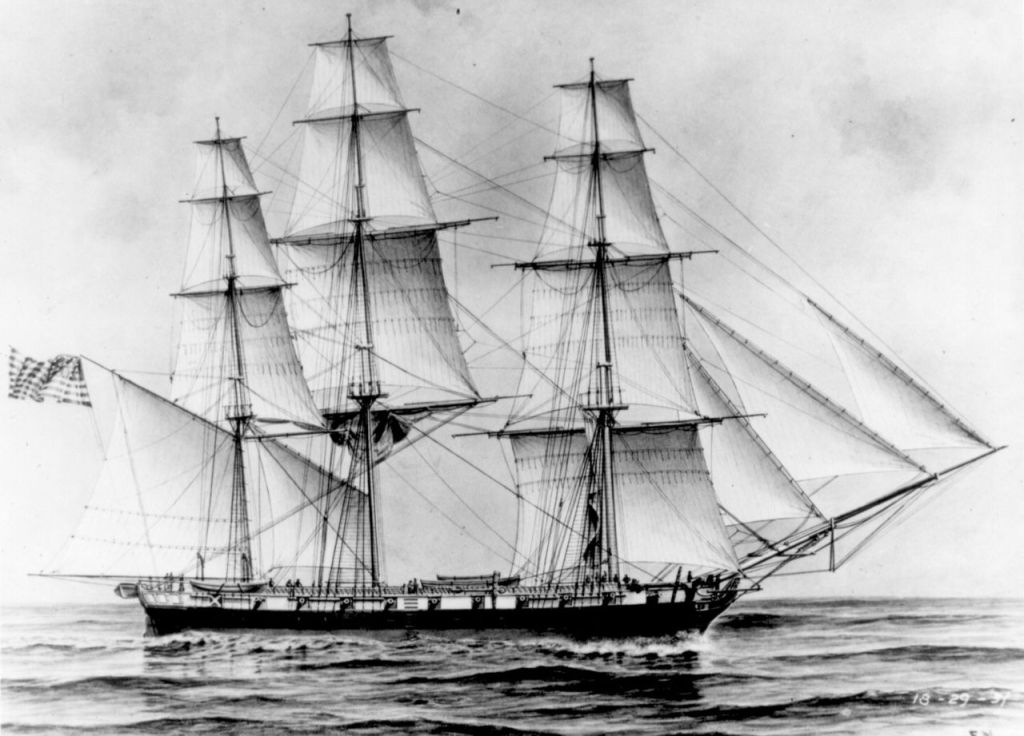
In 1820 Charles was given command of the Constellation, a sister ship to the famous Constitution, and given command of the American Pacific Fleet. While sailing around South America Charles noticed that every time they put into port for supplies his midshipmen were fighting duels. He ordered them to refrain from duels. Three of the midshipmen refused and were sent back to America. The rest obeyed and he stopped suffering casualties among his midshipmen from dueling. [iii]

There were several incidents happening all at once in the Pacific when Charles arrived. Several of the survivors of the famous sinking of the whale ship Essex, which was sunk by one of the whales they were hunting, were recovered. Three of them were brought aboard the Constellation to be cared for by the navy doctor.
In addition, many South American countries were in open revolt against their Spanish colonizers. Charles had mixed success handling these situations. He got along with the commander of the British Pacific fleet but could not stand Lord Thomas Cochrane, a famous British captain, who had chosen to command the Chilean navy against the Spanish. He chased, with his fleet, but could not capture, a Chilean pirate who had attacked an American ship near the coast. Perhaps his worst decision was to offer political asylum to the viceroy of Peru, when he was chased out of the country by the revolutionaries. This made almost everyone angry. Charles was replaced as commander of the Pacific fleet in 1822.
From 1827 to 1830 Charles was assigned to the West Indies fleet which spent most of its time chasing the pirates of the Caribbean. In 1830 his wife Cornelia, who he had spent very little time with during their marriage, died, leaving behind Charles and their four children.
Charles next assignment was as commander of the Brooklyn Navy Yard, where he oversaw the construction of many new naval vessels. His time ashore lasted from 1833 to 1839. His final ocean-going assignment was as commanding officer of the Brazil squadron from 1840-1842. The squadron protected American commercial vessels during many small conflicts that erupted in the South Atlantic during that time. Shortly after Charles’ command of the squadron ended the squadron was assigned to capture slave ships coming from Africa.
Charles retired from the navy after a career that spanned at least 43 years. He died in Baltimore, Maryland on February 8, 1848.
[i] https://www.history.navy.mil/our-collections/artifacts/uniforms-and-personal-equipment/awards/commemorative-medals/edward-preble-congressional-medal.html
[ii] https://www.usni.org/magazines/naval-history-magazine/2020/april/barbary-war-interlude-messina
[iii]https://penelope.uchicago.edu/Thayer/E/Gazetteer/Places/America/United_States/Navy/_Texts/REJTRC/Appendix/2*.html
 Clermont State Historic Site
Leave a comment