When the Revolutionary War broke out the Americans had to build an army from the ground up. One of the positions they realized that the new regiments would need was the regimental surgeon. These doctors would take care of the illnesses that often ravaged armies and treat wounds until the soldiers could be carried to the general hospital that was always further behind the lines. For the 10th Albany County Militia Regiment better known as the Livingston Manor militia the surgeon would be Dr. Thomas Thompson.
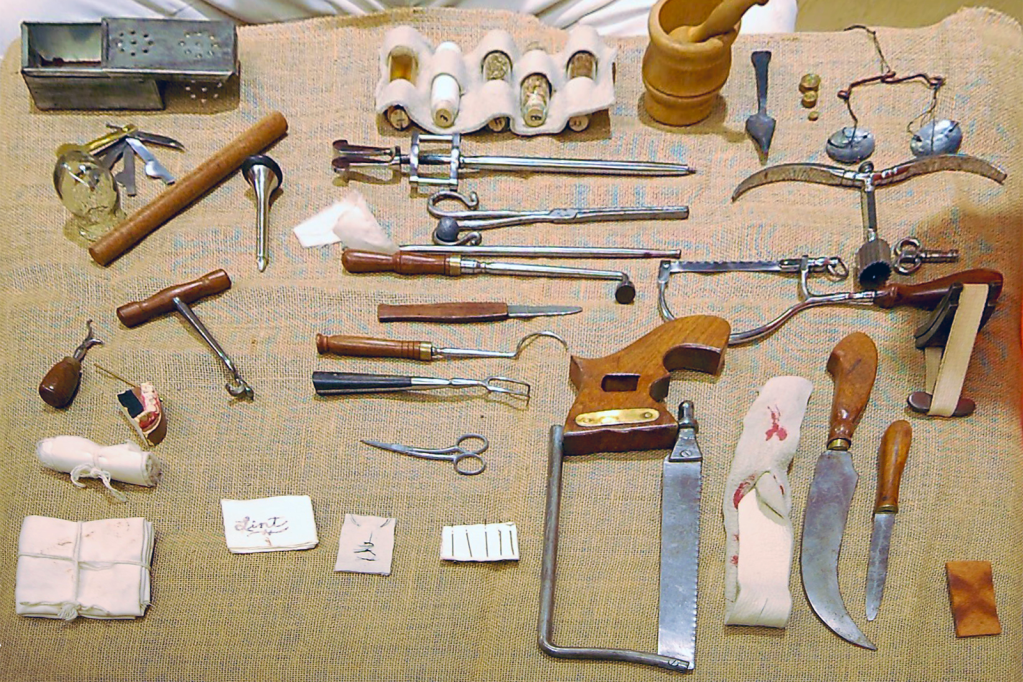
In the 18th century there were four ways to become a doctor. One could study as an apprentice under an experienced doctor. One could go to medical school in America beginning in 1765 in Philadelphia and in 1767 in New York City. The doctors that were considered the most skilled studied in Europe, typically London and Edinburgh. This of course required the most money and was an option only open to the upper classes. The last and most terrifying way for someone to become a doctor was to study on their own until they were ready to declare themselves a doctor. Efforts began in the 18th century to form committees and boards that would ensure a basic amount of competency from doctors, but these efforts were stymied by the huge amount of real estate that a limited number of doctors had to cover in America. In 1775 there were about 3,500 practicing doctors in the colonies, around three hundred had attended school in Europe. That same year there were approximately 2.5 million people in the colonies or around 715 patients for each doctor.
It’s not known how Thomas Thompson achieved the title of doctor but its safe to assume that he did not attend school in Europe as he was not practicing in or adjacent to a large city as those physicians often did. It is more than likely that he had trained as an apprentice until his mentor decreed him ready to practice on his own, just like an apprentice blacksmith or printer. Whatever the case Dr. Thompson was practicing on Livingston Manor in 1776 and supported the patriot cause enough to join his local militia.
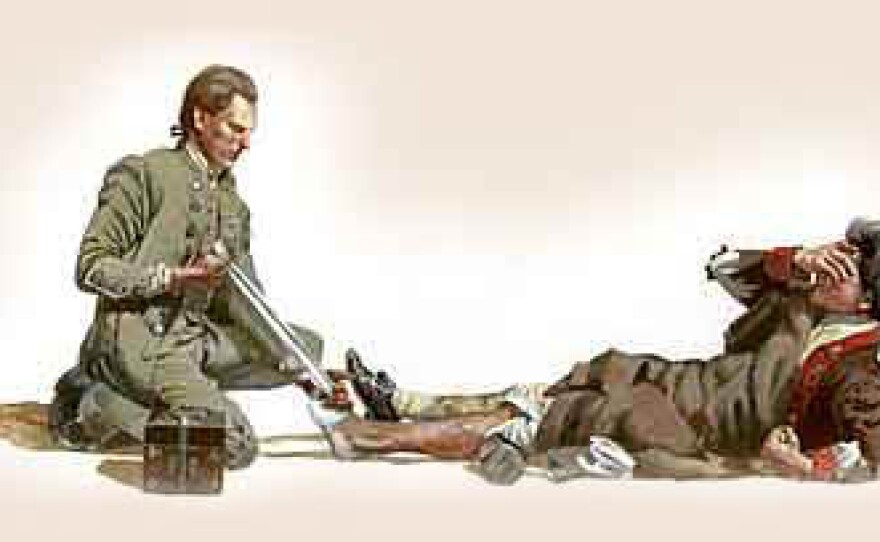
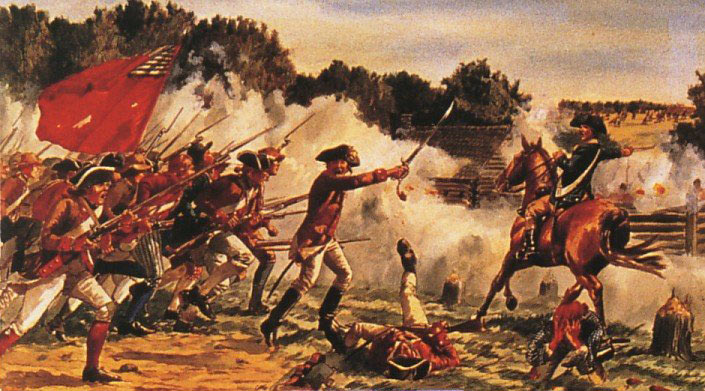
Thompson was part of the most important call out of the Livingston Manor militia’s entire existence. The Livingston Manor militia was called out in September of 1777 to join the Northern Army to stop General John Burgoyne’s advance on Albany. Between 250 and 300 men answered the call. Some, who responded with much speed, were present to take part in the first battle of Saratoga on September 19, 1777. The rest arrived at the American camp after the first battle after the first battle but took part in the second, decisive battle, on October 7. Thompson served from September 21, 1777-Ocotber 13, 1777, meaning he was present for the second battle. Most of his time would have been taken up with treating the typical fevers and other complaints that occurred when large groups of men camped in close proximity to each other. On October 7, though his skill would have been put to the test. It doesn’t appear that the Livingston Manor militia had anyone killed during the battle despite being heavily engaged. It is not known how many men were wounded though. Perhaps it is a testament to Dr. Thompson’s skill that there were not any fatalities among the militia that day.
Despite his service to the militia, it all came apart for Thompson on the May 26, 1779. Susannah Pare swore an affidavit that was sent to the Commissioner for Detecting and Defeating Conspiracies of New York. In her testimony Pare swore the Dr. Thompson had come to the house of Teunis or Angus McDonald and treated on Jacob Bush for an illness. Bush was supposedly a British agent who had traveled north from New York City. Dr. Thompson had provided aid and comfort to the enemy! He was promptly called to appear before the committee although through a comedy of errors, including one person who simply couldn’t find possibly the only doctor on Livingston Manor, Thompson was never served, and the matter fell by the wayside.
Until the next summer when the affidavit was brought up again. Although it had been changed this time to claim that Bush was an agent from Canada traveling to New York City when Thompson treated him for his illness.
Thompson was called before the committee on September 18, 1780, and was thrown in jail for his supposed crimes. On September 23, Thompson applied for his release, which was granted with the condition of a £500 bail. Somehow Thompson had the money or got it and was released.
From October 14-October 30, 1780, Thompson was once again serving with the militia on a call out. During that time the witnesses against him were called before the Committee. There is no record of what they said but Thompson was never again jailed or tried, and his name ceases to appear in the Committees minutes.
Dr. Thompson received the pay owed to him for his service in the militia from Col. Henry Livingston of the Manor militia on June 10, 1785, and then disappears from history.
Or does he?
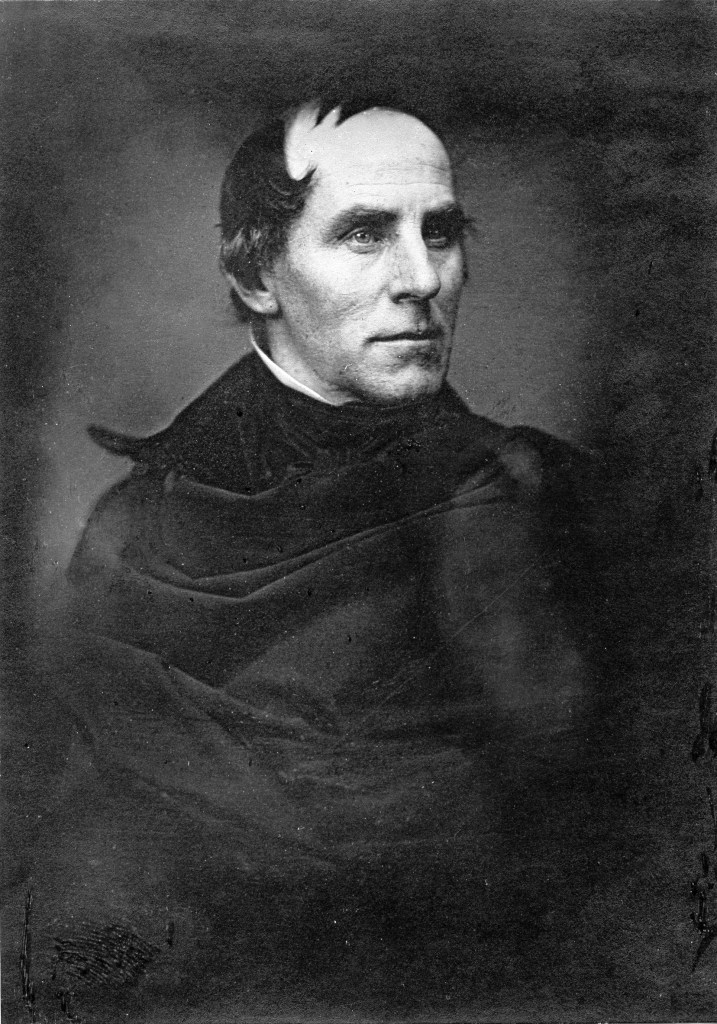
At the end of the Revolution, a Dr. Thomas Thomson arrives in Catskill. He purchases a house in the village as well as some land on “the hill” above the small town. There he keeps a few animals and a few plots to grow some crops for the use of his family. When Dr. Thomson dies in 1805 one of his seven children inherits the land above Catskill. In 1815, the Thomson family built a Federal style house on the hill and began to call it Cedar Grove. The artist Thomas Cole rented the home for a few years in the 1830’s until he married into the Thomson family and Cedar Grove became his home until he died in 1848.
Dr. Thomas Thompson leaves behind many questions. How did he become a doctor? How successful was his practice? Did he knowingly treat an enemy agent, or did he merely treat a traveler for illness as any doctor would? Was he the Dr. Thomas Thomson who’s family built Cedar Grove? (This one is a huge coincidence if he wasn’t) What we do know is that Thomas Thompson seems to have been a competent physician who served the people of Livingston Manor for years until most of the doctoring in the area was taken over by, I kid you not, William Wilson.
 Clermont State Historic Site
Leave a comment