The Treaty of Amity, Commerce, and Navigation, Between His Britannic Majesty and the United States of America or as it is more commonly known, The Jay Treaty, named after its American negotiator, was a sharply dividing document in American history and lead to the strengthening of a two-party system in the states.
The treaty became clear that neither the United States nor the British were going to live up to the commitments of the 1783 Treaty of Paris that ended the Revolutionary War. The British were refusing to give up forts that they had conceded to the Americans in the Treaty of Paris which they said was in retaliation for the Americans not paying debts as called for by the treaty. The border with Canada was vague and needed to be settled more firmly and the British were providing weapons and ammunition to the indigenous peoples of the Northwest so that they could continue to fight the American army there. In addition, new problems had cropped up including the seizure of American ships during the French Revolutionary Wars and the impressment of American sailors to fight the French.
George Washington sent Chief Justice of the Supreme Court John Jay to negotiate the new treaty. His British counterpart would be William Grenville, 1st Baron Grenville. The treaty can be considered a success for both sides. It took another two years, but the British did finally abandon their forts in America. The British paid for the ships they had seized, and the Americans paid the debts they owed. Jay was unable to get the British to agree to stop impressing American sailors though. He was also unable to get compensation for enslaved people that the British had taken with them when they left America. This had been a major demand particularly from southern plantation owners.
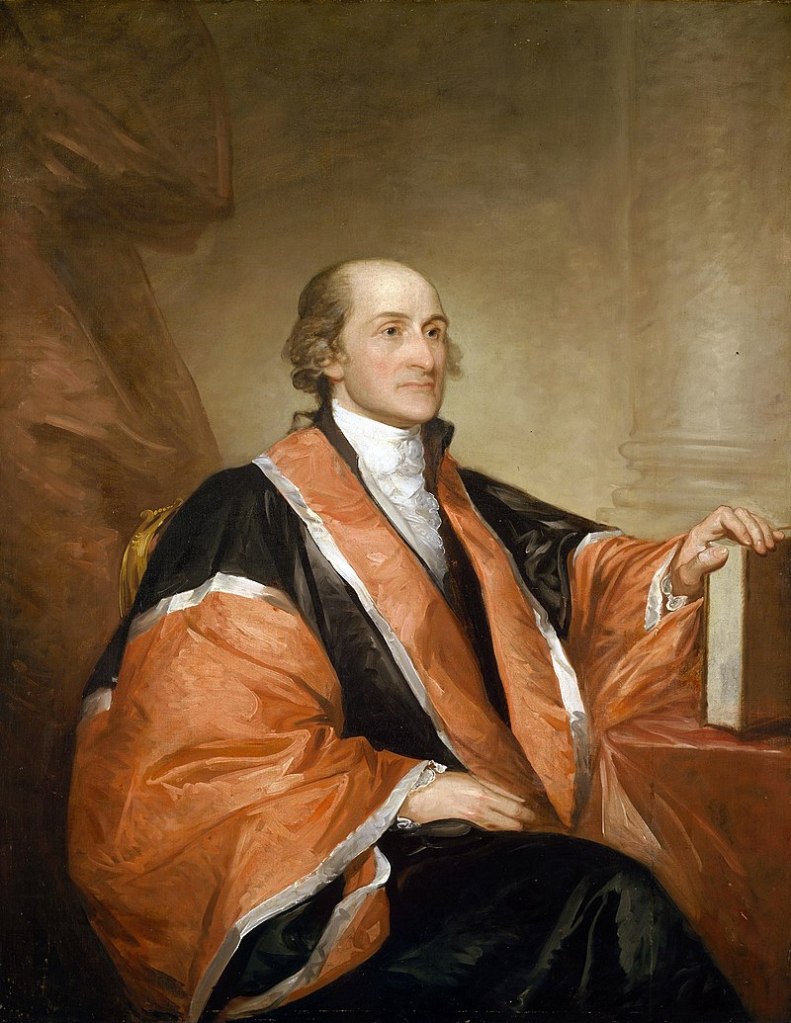
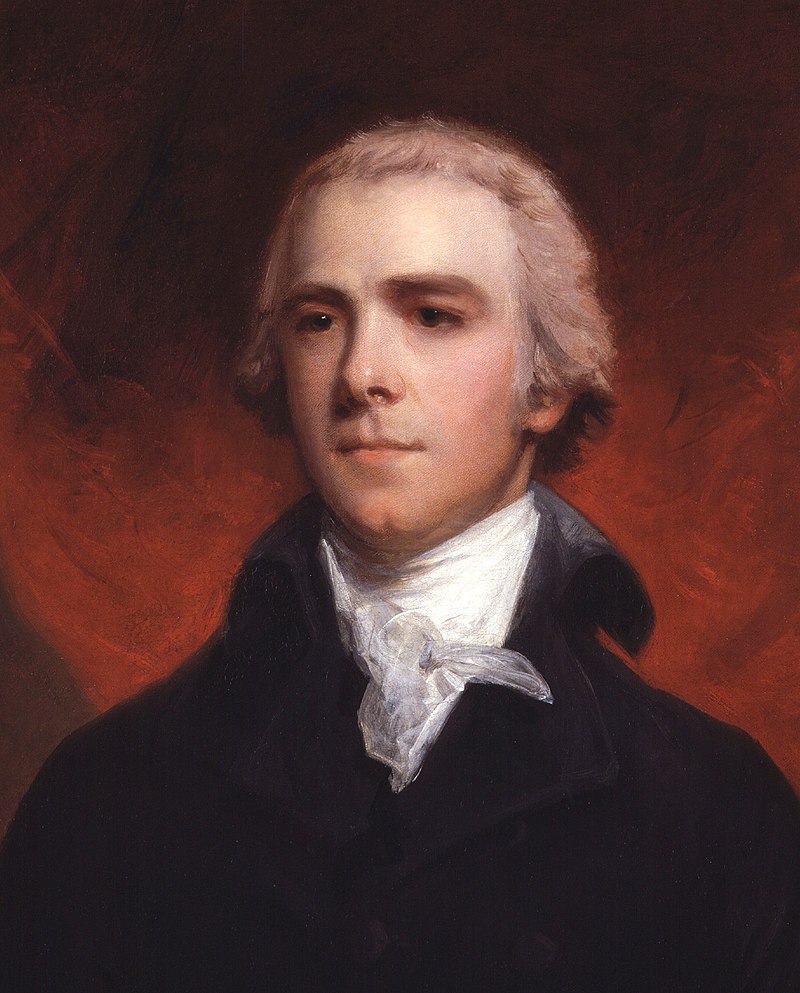
The trade agreements made in the treaty were perhaps its most surprising aspect. Both nations agreed to trade with the other with most favored nation status and the Americans were given extremely limited access to the Caribbean trade (only ships smaller than 70 tons which was small for the time).
Disappointingly though, at least for many Americans, was that Jay agreed to join Britain’s anti-French maritime rules. For the Democratic-Republicans led by Thomas Jefferson this was an abandonment of the treaty they had signed during the American Revolution that helped them win the war. Their allies the French were being abandoned to their fate even as they fought for their liberty.
For Chancellor Robert Livingston this was a decisive moment in his political career. As a supporter of the ratification of the U.S. Constitution and a supporter and political ally of George Washington, Livingston had long been viewed as and probably viewed himself as a member of the Federalist Party.

But that party had forgotten him. He held no federal office, and his advice was no longer sought out. Livingston was also a supporter of the treaty with the French having worked extensively with the French delegation to Philadelphia while he was Secretary for Foreign Affairs. He saw the treaty as a betrayal only made worse by the fact that it was negotiated by his now former best friend John Jay.
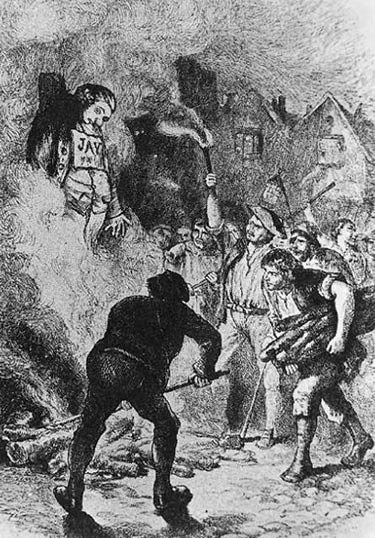
After the treaty was published in newspapers all over the country a vicious war of words began. (Sometimes it was more as Jay’s effigy was burned or blown up all over the United States). The Chancellor is known to have written at least sixteen letters attacking the treaty using the pen name “Cato.” The articles were considered very persuasive but ultimately to long, TLDNR was a thing even in the eighteenth century.
But who was Cato and why choose him as your pen name? Cato, known as Cato the Younger to distinguish him from great grandfather Cato the Elder. Cato was a Roman senator considered to be of the highest ethics and morals. He fought for the Roman Republic against the Civil War started by Julius Caesar in 49 B.C.E. When anti-Caesar forces were driven back and even out of Italy all together, Cato was given command of the city of Utica, whose remains stand in present day Tunisia. When Caesar’s victory was all but assured Cato sent diplomats to Caesar seeking pardons for the Romans still in Utica in 46 B.C.E.
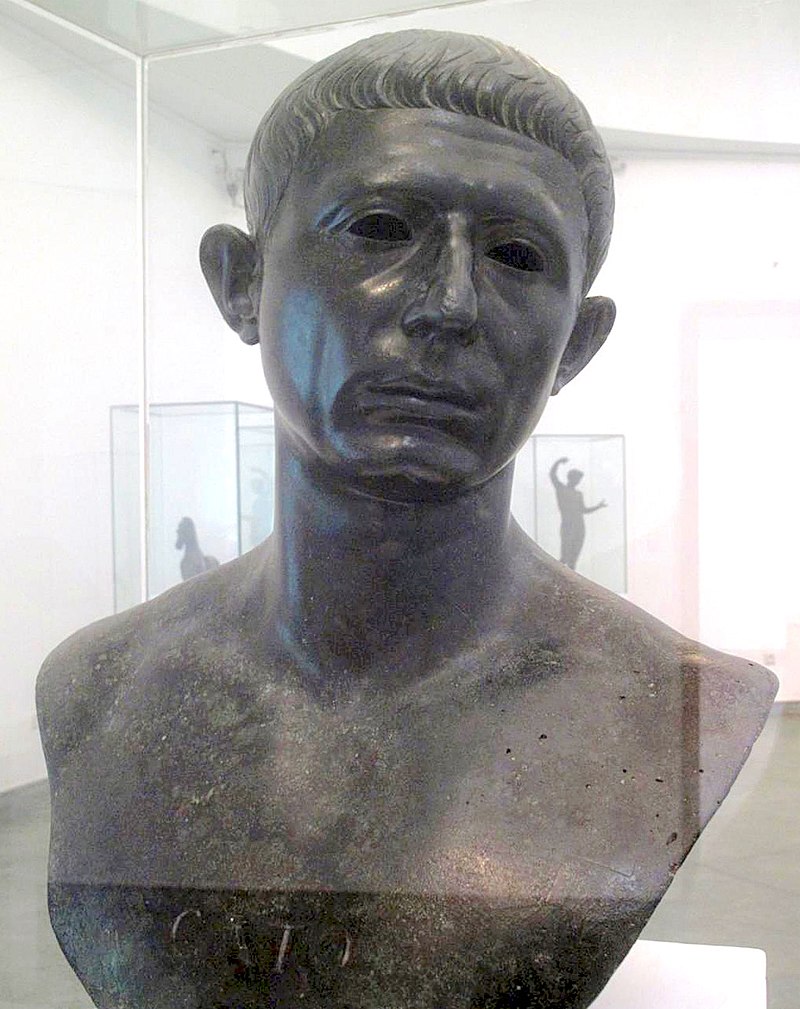
Except for himself.
Cato said, probably apocryphally, that a truly freeman would never become a slave. He then stabbed himself with a sword through the abdomen rather than accept a pardon from Julius Caesar.
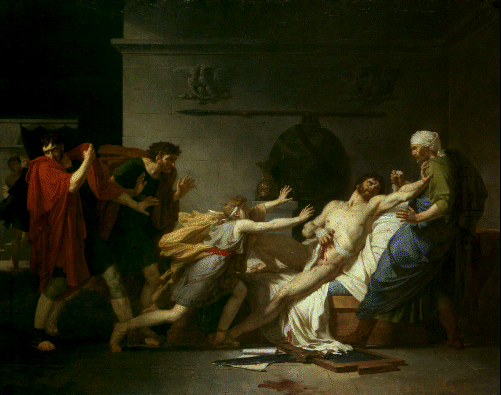
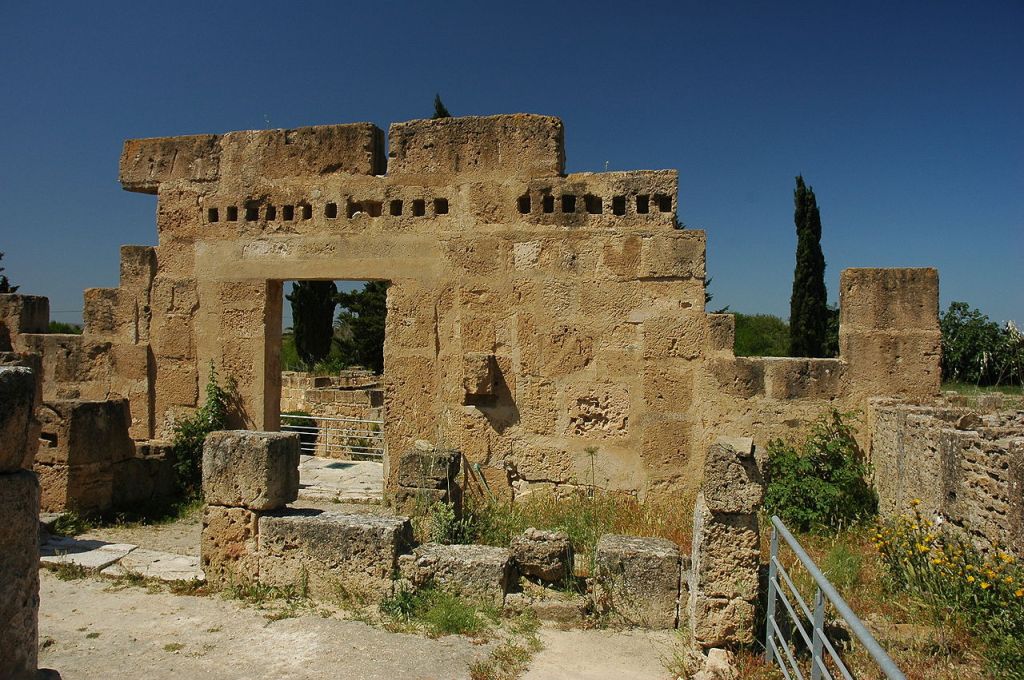
So why did the Chancellor choose Cato as his pen name. During the enlightenment Cato became a hero to republicans everywhere. His legacy was only elevated when Joseph Addison wrote the play, Cato, A Tragedy in 1712 or 1713. Cato was a republican fighting against a monarch and an individualist fighting against a totalitarian government. The legend of Cato was so great and respected that George Washington had the play performed at Valley Forge.
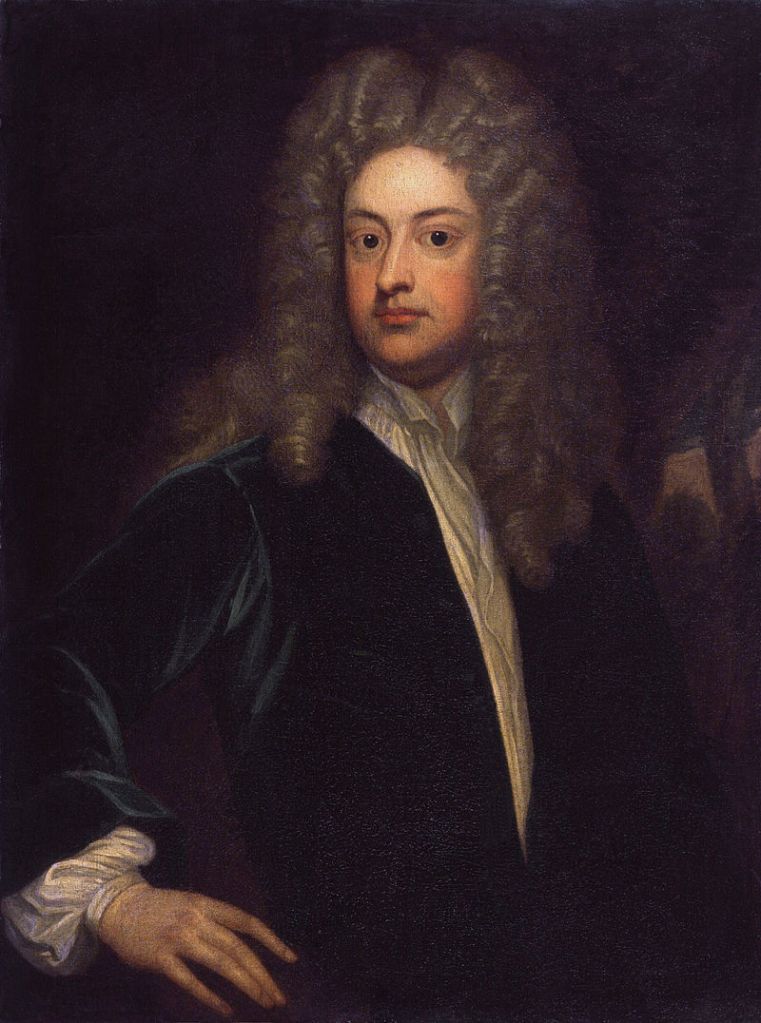
And perhaps that’s how The Chancellor say himself. Someone standing up against the government for what he believed to be right. Someone virtuous and unwilling to abandon allies as quickly as John Jay, George Washington and rest of the Federalists seemed to be. Someone who kept his promises.
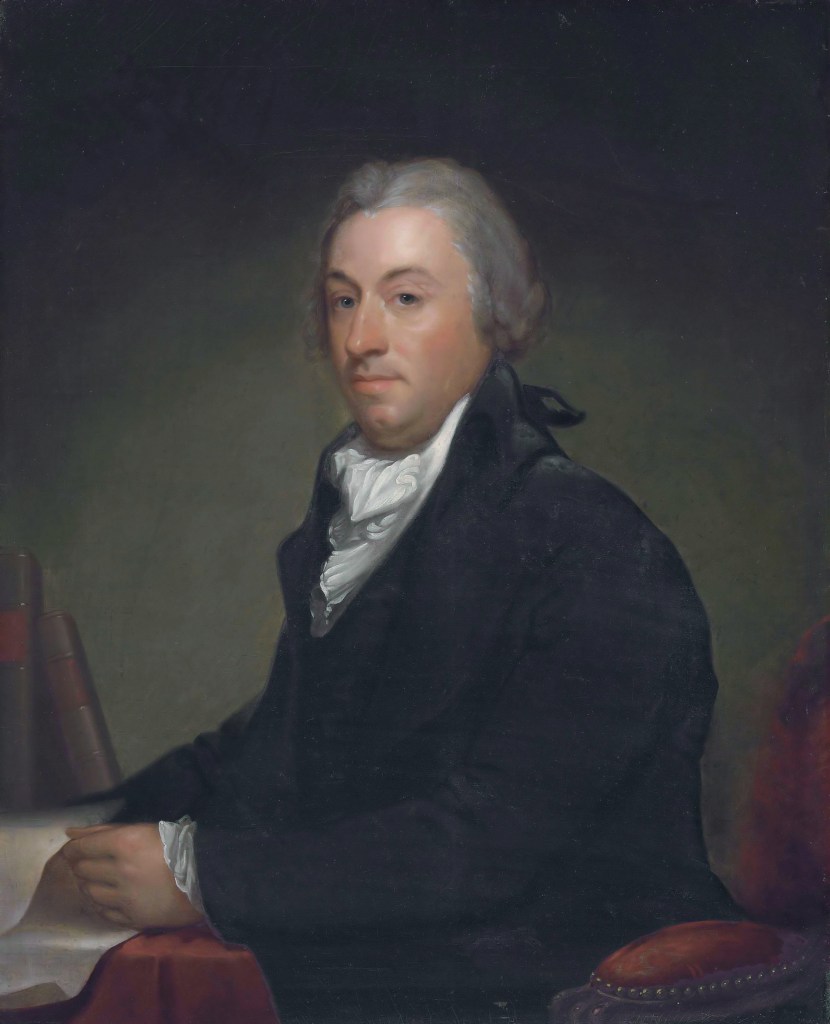
Despite the Chancellor’s protestations, the protestations of nearly half the country and the consideration of impeachment by the Chancellor’s brother, Representative Edward Livingston, the treaty went into effect on February 29, 1796, having passed in the Senate by a vote of 20-10. The exact minimum number of votes it needed to pass.
Did John Jay betray both America and France in 1794? Maybe. Did he push off war with Great Britain for another 18 years? Maybe. What is certain is that the creation of the Jay Treaty solidified the two-party system in this country in a way that nothing prior had. It also decidedly push Chancellor Livingston from one party to the other and irrevocably shattered his friendship with Jay.

 Clermont State Historic Site
Leave a comment