William Alexander has to be one of the most fascinating Livingston relatives of the 18th century. His Livingston connection is through his wife Sarah, who was the daughter of Philip Livingston, the Second Lord of Livingston Manor. They married in 1747 and had three children. The marriage also made him the brother-in-law of William Livingston, New Jersey’s first governor.
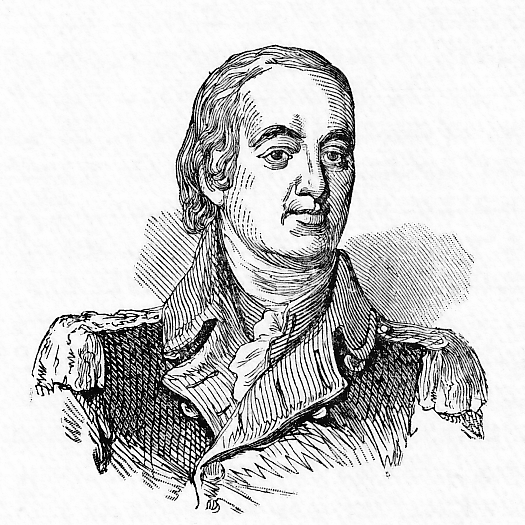
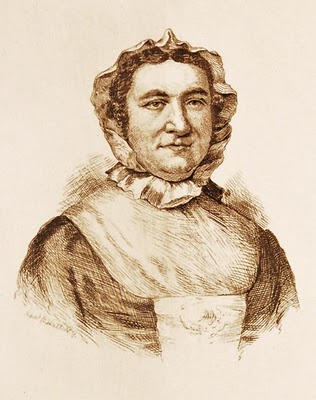
Alexander was born in 1726 in New York City. His father, James, was a lawyer who had been born in Scotland. James supported the Jacobite uprising led by James Francis Edward Stuart in 1714 and fled to America when the uprising failed. He married Mary Spratt Provoost, who was a powerful merchant in New York City, having inherited a mercantile business from her first husband Samuel Provoost when he passed away. She continued to expand the business and by the time of the French and Indian War was selling supplies to the British army.

Rebellion seemed to run in Alexander’s veins. In addition to his father taking part in the 1714-1715 Jacobite uprising, his maternal grandfather John Spratt took part in the Leisler Rebellion in the late 1600’s that saw Robert Livingston, the First Lord of Livingston Manor chased out of New York for a time. In addition, Mary was responsible for securing a lawyer for John Peter Zenger when he was accused of libel by the colonial governor William Cosby. James Alexander was his first lawyer but was found to be in contempt of the court and disbarred. Mary convinced Philadelphia lawyer Andrew Hamilton to take the case. Zenger was found guilty although a year later the assembly reversed its ruling, and the case established the idea of freedom of the press in America.
During the French and Indian War William Alexander worked as a provisioning agent for the army (securing many supplies from his mother’s shop) and as an aide-de-camp to Governor William Shirley. During a trip to England with Shirley Alexander found out about the vacant Earldom of Stirling. It had gone unclaimed since the 5th Earl had died in 1739. William Alexander was distantly related and decided to pursue the title. He was awarded the title, and a significant amount of land in America that belonged to the Earl, in 1759 by a Scottish court. Three years later a British court denied his claim to the title. Nevertheless, William Alexander was referred to as Lord Stirling for the rest of his life even after joining the American Revolution where in the colonies sought to shed themselves of British rule and titles.
Soon after the war broke out, he was named a colonel in the New Jersey militia and used the sizeable fortune he had inherited from his parents to ensure his 1st New Jersey Regiment was finely equipped. In March of 1776 he was made a brigadier general in the army.
At the Battle of Long Island on August 27, 1776, Lord Stirling and his brigade were being pushed back by a combined force of British regulars, Hessian troops and Royal Marines. At the Gowanus Creek he ordered his brigade to escape across the creek while he and 260 soldiers of the 1st Maryland Regiment took up a position near a stone house to cover their retreat. Outnumbered by thousands Stirling led his troops on two assaults against the British position that held the British advance long enough for George Washington to reform what was left of his army on Brooklyn Heights. After the second attack, having suffered severe casualties, Stirling ordered his men back across the Gowanus Creek. The British pursued and only a dozen men of Stirling’s detachment made it back to American lines. Watching the action from Brooklyn Heights, George Washington was heard to say, “Good God, what brave fellows I must this day lose.”
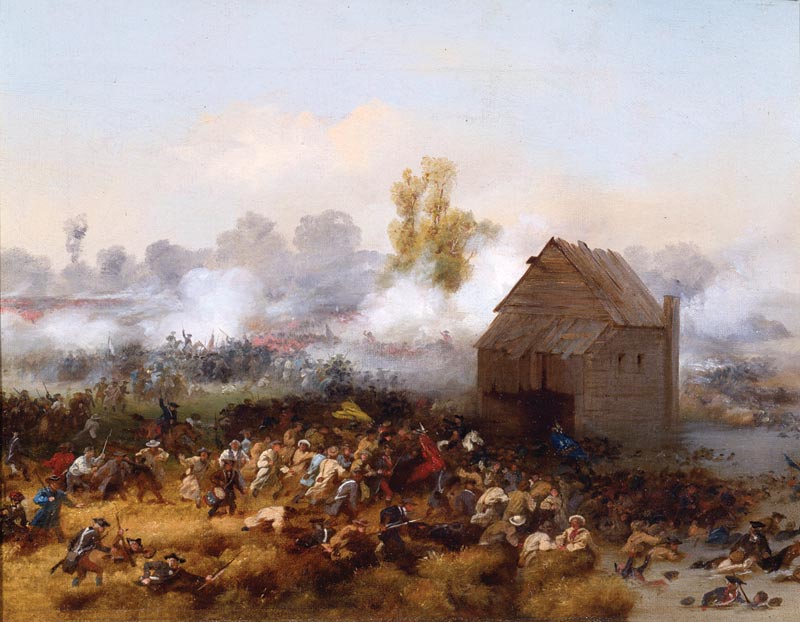
Stirling himself was surrounded by British soldiers but broke out so that he could surrender to the Hessians and not the British. He was a prisoner of war for a brief time in New York City before being exchanged for a captured British officer. Stirling was promoted to major general by Congress. He was allowed to accept the surrender of the Hessian forces at Trenton as a mark of respect for his bravery.
During the winter of Valley Forge a conspiracy arose to have George Washington replaced by Horatio Gates as commander of the American army. The conspiracy was led by Thomas Conway, and Irish born general who had been trained in France. He called Washington a “weak general” and the conspiracy went down in history as the Conway Cabal. One of Horatio Gates’ aides, James Wilkinson, stopped at Lord Stirling’s headquarters for dinner and got drunk. He spilled the beans about the whole conspiracy. Stirling immediately informed Washington and the conspiracy was broken up. Conway was stripped of command and forced to resign from the army in March of 1778. He was challenged to a duel by a friend of Washington’s and though wounded recovered to fight against the French Revolution as a member of the Royalist forces. He was sentenced to death by the Revolutionaries but instead allowed to leave France forever at which point he disappears from history.
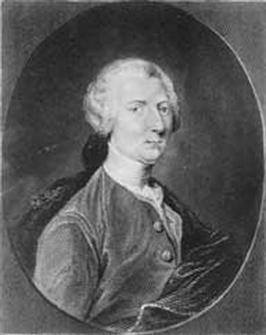
Stirling however had more time to make history. At the Battle of Monmouth in June of 1778, he commanded the American left wing and repelled a British attempt to turn his flank that, if successful, could have driven the Americans from the field. Instead, the Americans drove the British from the field that day.
When Washington moved his army south to trap General Charles Cornwallis at Yorktown, Virginia Stirling was given command of the Northern Department, headquartered in Albany, New York. On January 15, 1783, he died there officially of gout. Stirling was known for a lifetime of overindulging in food and drink, and it finally caught up to him. His wife Sarah Livingston Stirling survived him until 1805. Stirling was buried in the churchyard of Trinity Church in New York City.
 Clermont State Historic Site
Leave a comment