Robert Livingston, the first Livingston in America, had been born in Scotland, raised in the Netherlands and, after a short stay back in Scotland, emigrated. The Livingston family had been in Scotland for centuries at that point, but the story of Robert’s ancestors is neither simple nor straightforward.
The Highland Livingstons certainly have the longer history in Scotland. They were originally part of Clan MacLea. Which some members anglicized to Livingston. MacLea itself is the anglicization of Mac an Leigh meaning “son of the physician.” Its also possible that MacLea comes from Mac Dhunnsheibhe or “son of the chieftain of the mountains.” The family itself may have originated in Ireland.
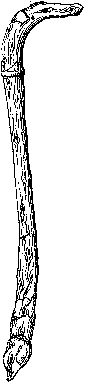
Clan MacLea lived in Argyll and were centered on the Isle of Lismore. The island was Christianized in the 5th century when Saint Moluag came to preach to the Picts. Interestingly the head of Clan Livingstone is the Coarb (successor) of Saint Moluag and holds his staff as a symbol of this.
The Livingstone’s were one of the clans to face off against the British army at the Battle of Culloden in 1746. There, Donald Livingstone, also known as “Hairy Donald,” was part of the bodyguard protecting the banner of the Stewarts of Appin. With the rest of the bodyguard dead or wounded Donald ripped the flag from its pole wrapped it around his body and began to retreat from the field. He was hit by a musket ball, but the fabric of the flag stopped it. He also fought two British soldiers who tried to capture him, killing one and chasing the other off. Donald escaped the field, and the Appin flag was the only Scottish flag not captured by the English that day.
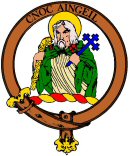
A motto for the Livingstone Clan Chief is “NI MI E MA’S URRAIN DHOMH” which means I shall do if I can and may be related to the Livingston family motto Si Je Puis (If I can). They also have a motto on their heraldic crest which reads “CNOC AINGEIL’ which means Hill of Fire and refers to a mound on the Isle of Lismore.
As for the Lowland Livingstons they seem to spring from a man named Leving who arrived in West Lothian in the early 12th century. There is no clear answer as to where he was from before that and it has been speculated that he was Anglo-Saxon, Fleming, Frank, Norman or even Hungarian. He seems to have been the progenitor of the Livingston/e name. A descendent of his, James Livingston, was awarded some land in Clan McLea territory in the 1640’s. Its possible the change from McLea to Livingstone began in earnest at this point.

Based on where Robert Livingston’s family was based it is more likely that he was descended from the Lowland Livingston but there is the intriguing possibility that he has some of the Highland Livingston blood
 Clermont State Historic Site
Leave a comment