It is easy to imagine bits of history happening in a vacuum. In fact, this is how history is often taught, one event after another, one date at a time. However, history is almost never that neat and tidy. Often events overlap, happen at the same time, or even interfere with each other.
Take for example the Invasion of Canada and Henry Knox’s mission to bring cannon from Fort Ticonderoga to Boston. Both occurred in the winter of 1775-1776, both occurred in the same region, and both were bold strokes from the rebellious colonies.

The Invasion of Canada started first, with Richard Montgomery leading an army north from Fort Ticonderoga in August. His mission was to bring the Canadians into the war on the side of the Americans if possible, to conquer the British army and Canada and end the threat of invasion from the north if not. General Philip Schuyler was supposed to lead the invasion, but illness forced him back to his Albany mansion.
It quickly became apparent that most Canadians had no desire to join the rebellion. Montgomery began to seize British strongholds culminating in the capture of Montreal in November. Montgomery sent his brother-in-law, Henry Beekman Livingston south to bring news of the captures to Congress in Philadelphia.
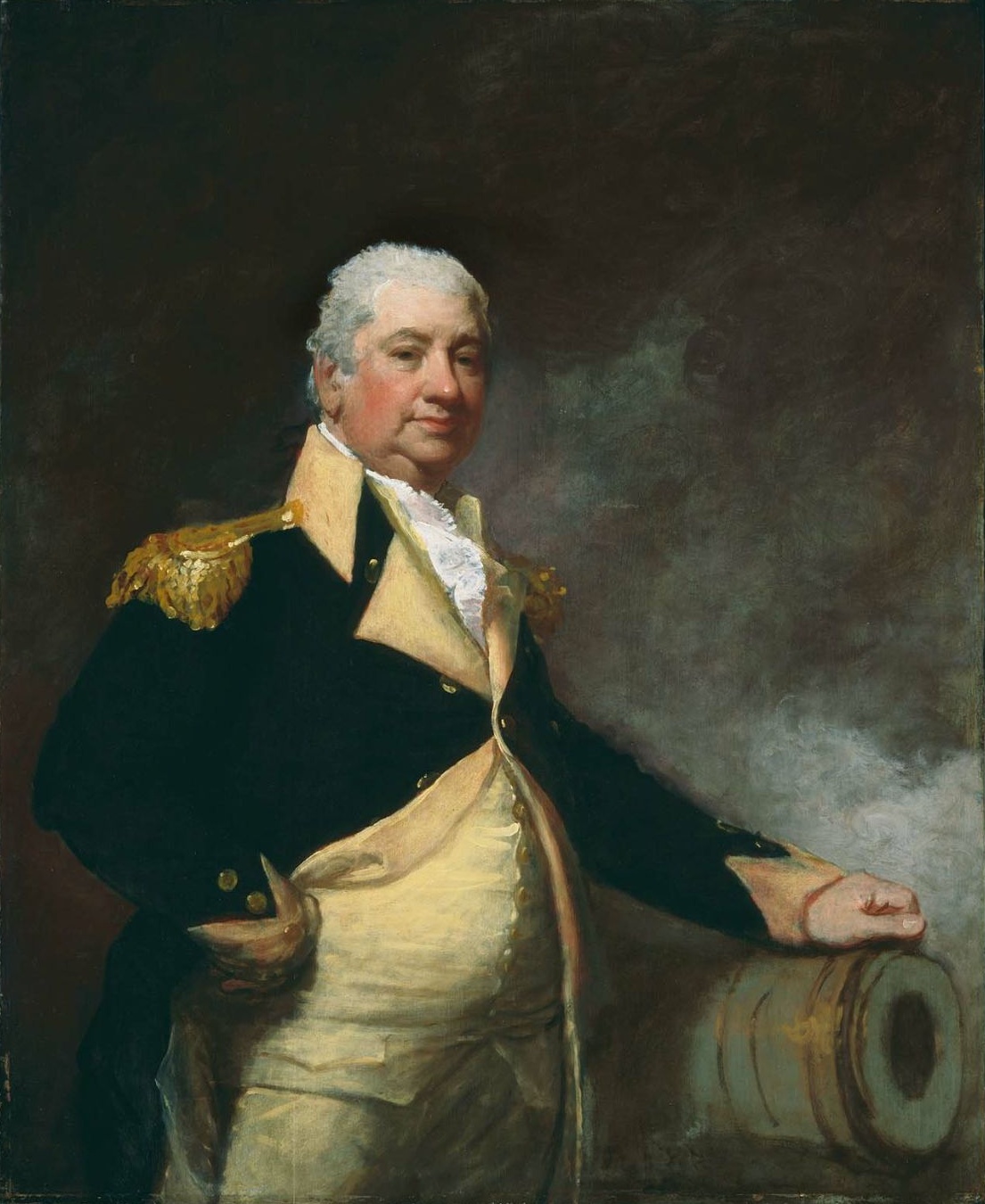
Meanwhile Henry Knox had set out from Boston for New York City and then Fort Ticonderoga to secure cannons for the American Army besieging Boston. The siege which began in April 1775 following the Battles of Lexington and Concord had become a stalemate. George Washington did not have the guns to drive the British out of the city or to keep British shipping away from the city to complete the isolation of Boston and the British believed they lacked the strength to break the siege on land.
 |
| Henry Knox |
Fort Ticonderoga, which had been captured by Benedict Arnold, Ethan Allen, and the Green Mountain Boys in May, had the cannons to drive the British out of Boston. Washington sent Knox to bring them back.
Knox traveled from Boston to New York City to consult with officers there, then up the Hudson Valley, spending one night on Livingston Manor, to Albany. At Albany he consulted with Philip Schuyler, who was in the city because he had not led the Invasion of Canada, about how to secure sleds, animals, and men to haul the cannon.
At Albany Knox had a chance run in with Henry Beekman Livingston, who was headed south. The young officers, both men were only 25 years old. They exchanged news of the war and Knox was able to send word to Washington of the fall of Montreal.[i]
Following, the encounter Knox headed north to the Fort. He removed much of the cannon at Ticonderoga and began the arduous task of bringing it south to Claverack and then east to Boston using the men and equipment that Schuyler had been able to secure for him.
 |
| The Death of Montgomery |
At the same time Montgomery had arrived at the walls of the city of Quebec. The remaining British army in Canada were holed up there. Montgomery led an attack on the city on New Year’s Eve that saw him killed and failed to capture the city. The attack devolved into a siege of the city. Like Boston, the Americans could keep the British in the city walls but could not breach the walls because they lacked heavy cannon to do so. The heavy guns would have come from Fort Ticonderoga but they, of course, had been taken by Knox to end the siege of Boston, which they did in March of 1776. The siege of Quebec ended ignobly in May of 1776 with the Americans retreating into New York.
Clearly Knox’s noble train of Artillery and the Invasion of Canada happened at the same time
 |
| Knox\’s artillery traveling on sleds |
but it’s the unintended consequences that are so interesting. Had Schuyler not fallen ill in the late summer he would not have been in Albany to supply Knox with the equipment he needed to take the cannon from Fort Ticonderoga. Had Knox not taken the cannon its possible that Canada would have fallen to the Americans instead of Boston. From there the what-ifs are innumerable.
[i] Flick, Alexander C. \”GENERAL HENRY KNOX\’S TICONDEROGA EXPEDITION.\” The Quarterly Journal of the New York State Historical Association 9, no. 2 (1928): 119-35. Accessed July 19, 2021. http://www.jstor.org/stable/43565992.
 Clermont State Historic Site
Leave a comment