 |
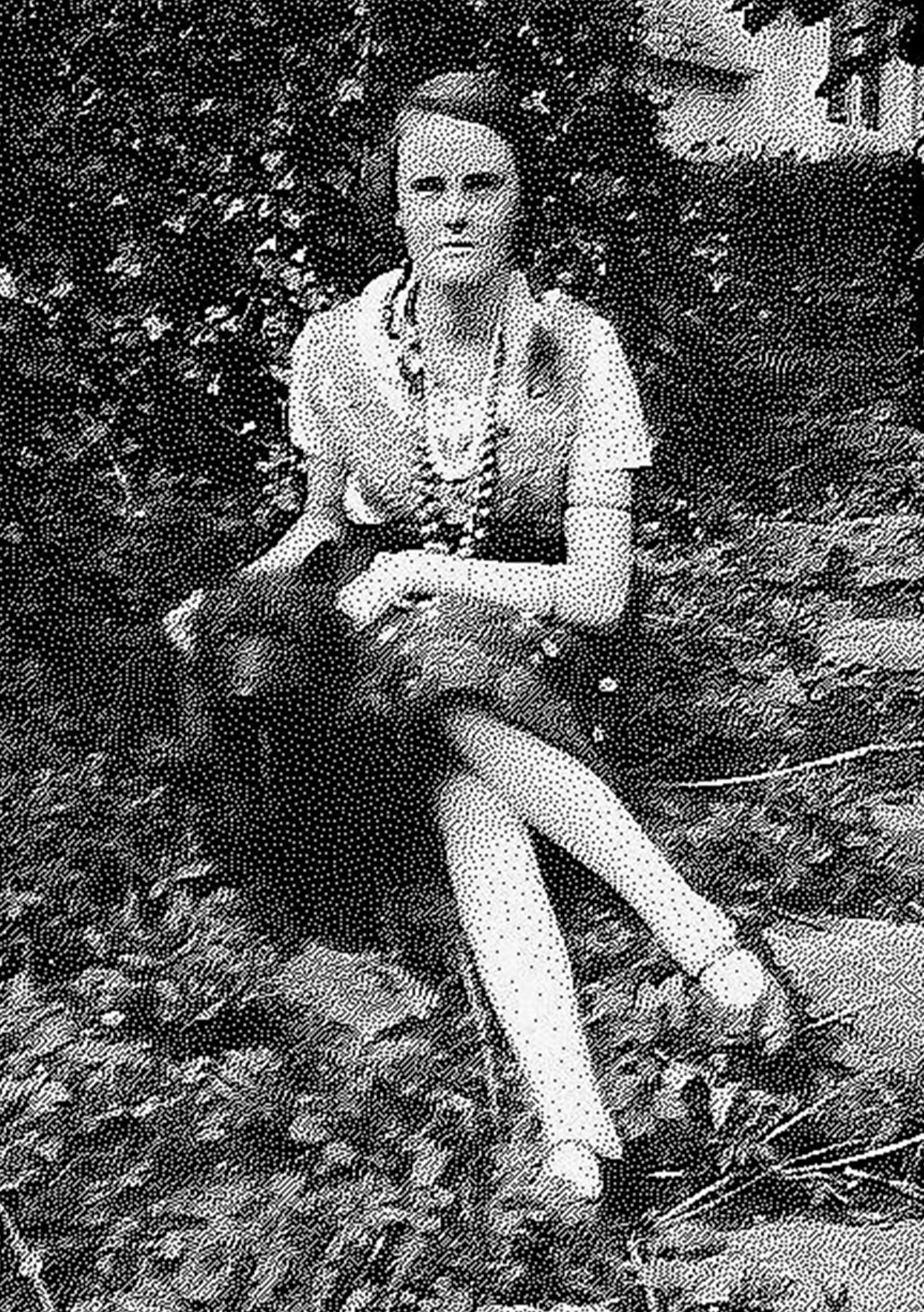
| Rosamund as a young woman |
This is the fifth in a series of five blogs that will explore the life of Katharine Livingston Livingston Timpson’s children. If Katharine was Clermont’s forgotten daughter, her children are the forgotten grandchildren. Whereas Katharine’s sisters Janet and Honoria had no children, Katharine had five children. They lived their lives aware of their Livingston legacy but free to pursue lives outside of the Hudson Valley. I owe a tremendous debt to Robert Timpson, one of Katharine’s grandsons, for the information he has provided on his father and his father’s brothers and sisters. Also, to Yanni Moller, a great-grandson of Katharine’s who has also provided a great deal of information on that generation.
Helen Rosamund Timpson was born, along with her twin brother John Alastair, in 1915 at Woodstock House on the ground of Blenheim Palace. She was tutored alongside her brother by their Flemish nurse, Zelly. Rosamund developed a love of the French language.
Rosamund developed a love of gardening at young age. She spent much of her youth at Appleton Manor., the house her mother had purchased and renovated toward the end of her life. Rosamund was deeply fascinated by the work being done on the house. The house contained elements as old as 1190 C.E. and further additions and modifications from the 16th and 17th century.
She lost her mother at the age of 17 and her father when she was 21. This seems to have instilled a bit of an independent streak in Rosamund. She traveled to America three times. In 1936 she sailed alone on the Europa and in 1938 she sailed alone on the Queen Mary. In 1937 she sailed on the Berengaria with her brother Alastair to attend the wedding of her brother Robert.
When World War II broke out Rosamund joined the Red Cross. She was first assigned to the Lord Chamberlain’s office. This was the central clearing house for information on wounded, captured and missing British soldiers. When her brother Theodore was captured at Calais, it was at first thought he was killed in battle. Rosamund was able to use her position to find that he was captured and spread the news to her family. Her experience in at the office would have given her a deep understanding of the brutal war her brothers were fighting in.
She was later assigned to a hospital for wounded soldiers who had been returned to England. Here she met Jean Cellerier, a French speaking Swiss national of Huguenot descent. They married in 1946 after the war ended and had one daughter Louise.
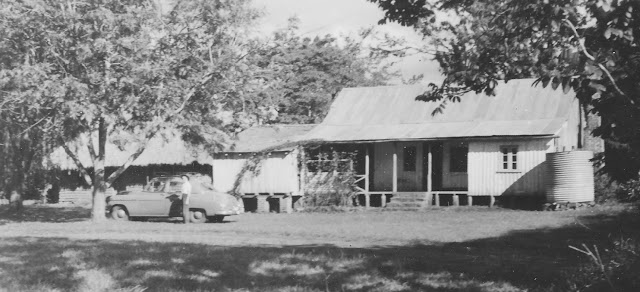
Rosamund\’s tea plantation in Kenya
The family moved to Kenya where Rosamund ran a tea plantation in the White Highlands near Nairobi, an area set aside for European settlers. Rosamund and her daughter Louise fell in love with the land and its people; within a few years they conversed fluently in the local language, Kiswahili. Rosamund cared intensely for the living conditions of the labourers on her farm, often foregoing the comfort of her own family – evident from the insert.
They lived in Kenya during troubled times. Between 1952 and 1960 the Mau-Mau Uprising saw various Kenyan tribes unite to fight the British army and colonists in their country. During this time Rosamund frequently kept a loaded pistol close to hand including keeping it in the soap dish when she was bathing. The reservation of the White Highlands for Europeans ended in 1961 and the government forced the sale of the tea plantation. The family bought a cattle farm in Kenya, which Rosamund largely ran, but in 1963 they were again forced to move when Kenya won its independence from Britain. Rosamund’s felt wrenched away from a country she loved. She turned her hopes to farm in Rhodesia/Zimbabwe.
Rhodesia was also facing turbulent times. In 1965 their government issued the Unilateral Declaration of Independence. The white minority government of the country declared themselves independent from British government. This was in direct conflict with the British decolonization policy of leaving their colonies independent with majority rule. The British government and the United Nations refused to recognize the UDI government. Nevertheless. the UDI government continued to rule until 1979 then an agreed upon settlement saw a brief period of direct British rule followed by the country becoming independent and majority ruled as Zimbabwe. It is not clear when Rosamund left Rhodesia/Zimbabwe for Gillitts in South Africa.
In Gillitts, Durban, South Africa she created a market garden farm, selling fruits and vegetables to consumers. Jean died in 1972 and Rosamund continued to keep herself busy in business. She co-ran a hotel called the Lord Milner in Matjiesfontein. The hotel had started life as a health resort for Europeans suffering from respiratory ailments. By the time Rosamund joined the hotel it was a place where visitors could experience a true Victorian throwback hotel experience, about three hours outside of Cape Town. The hotel is still in operation.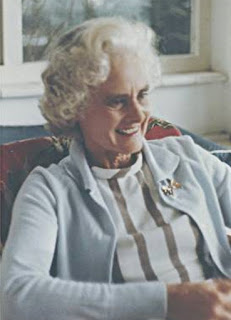
Rosamund in 1969
Rosamund maintained a keen interest in many things outside the hotel as well. She was interested in gardening, world affairs and cricket. She attended church once a week. Even though she was unqualified she acted as the pastor of the chapel in Matjiesfontein.
Rosamund passed away in 2004 and is buried in South Africa. She was a strong woman who had led her family through many difficult situations. She sent spectacular Christmas cards to her family every year featuring photos of the stunning landscapes that she lived in or the beautiful animals who inhabited the land with her. She never lost faith in her own abilities to start over and succeed, which she had to do many times.

 Clermont State Historic Site
Leave a comment