This is the third in a series of five blogs that will explore the life of Katharine Livingston Livingston Timpson’s children. If Katharine was Clermont’s forgotten daughter, her children are the forgotten grandchildren. Whereas Katharine’s sisters Janet and Honoria had no children, Katharine had five children. They lived their lives aware of their Livingston legacy but free to pursue lives outside of the Hudson Valley. I owe a tremendous debt to Robert Timpson, one of Katharine’s grandsons, for the information he has provided on his father and his father’s brothers and sisters.
 |
| Bob as a school boy |
Robert Clermont Livingston Timpson was the third child of Lawrence Timpson and Katharine Livingston Timpson. Born in 1908, it is believed that his parents gave him such a historic name as a way to stake out a claim on Katharine’s right to inherit Clermont and possibly to spite Katharine’s new stepmother Alice. Robert was of course the name of generations of Livingston men including Robert the first Lord of Livingston Manor, Robert, the builder of Clermont, Robert the Judge, who helped to host the Stamp Act Congress and built the first gunpowder mill in New York and Robert the Chancellor, who helped to draft the Declaration of Independence. Clermont, of course, had a double meaning. It was the name of the house but also the name of Katharine’s grandfather who had given the house to her in his will before she sold it to her father for $1.
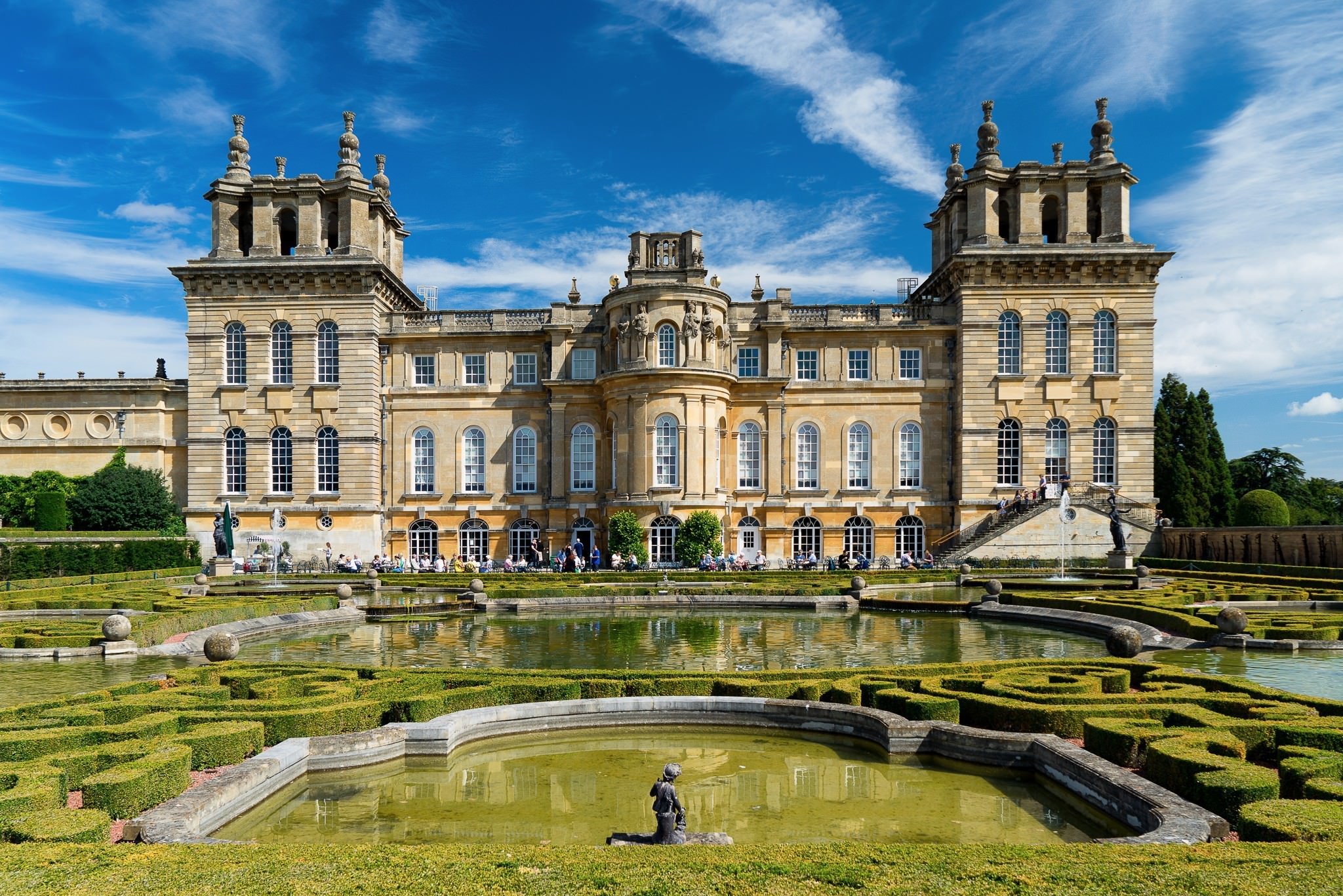 |
| Blenheim Palace |
Bob, as he was known, was the first of the Timpson children born in England. He grew up at Woodstock House on the grounds of Blenheim Palace. He was educated at Eton where he won athletic competitions in swimming, running, and rowing. Also, a very clever young man, Bob won the Eton Physics Prize.
 |
| Woodstock House |
For college Bob came to America to study at Harvard. Franklin Delano Roosevelt promised Lawrence Timpson in a letter that his son, James, a year older than Bob, would look out for the Timpson boy on campus. Bob graduated Harvard Phi Beta Kappa in Physics.
After graduation, Bob chose to pursue a career in business rather than science. He began his work on Wall Street and after a few years married, Elizabeth Johnson Hutton, the daughter of the owner of W.E. Hutton and Company, a large brokerage firm on Wall Street. He was later made managing partner of the firm. Bob and Elizabeth had three children together: Sarah Livingston Timpson, Lawrence Livingston Timpson, and Robert Clermont Livingston Timpson Jr. (who has provided so much help and information for these blogs)
When World War II began, he spent evenings in 1940 and 1941 listening to the radio\’s grim reports from Europe, knowing that both his brothers were in combat in the British Army. In October 1940, before Pearl Harbor, he registered with the Draft Board, but after Pearl Harbor in 1941, he applied to the Navy like many gentlemen. But then he got a call from an Army General who had combed the Harvard files and found that Bob had a background in electronic echo ranging, the physics that underlies radar. He was promised a Captain\’s commission, although when he entered active duty in April 1942, four months after Pearl Harbor, he found himself a 2nd Lieutenant Radar Officer, 1st Fighter Command, posted to Mitchel Army Air Force Field on Long Island, which was the headquarters for the defense of the U.S. East Coast. In October 1943 he was promoted to the rank of Major. His duties used his talents in physics, meeting with very smart scientists at MIT and in Washington, trips to climb mountains up and down the East Coast to explore the best locations for radar towers, and eventually building and staffing 26 of them. One was sited atop Green (Cadillac) Mountain on his beloved Mount Desert Island. Not bad duty.
 |
| A map of the radar coverage of the East coast |
Defending the U.S. from a German attack might have been improbable since German planes could not fly roundtrip that far (3800 miles to New York), but Germany had been planning to build aircraft carriers (never completed), or they might have made a “morale symbolic” one-way bombing flight (just as the U.S. had done in reverse with the famous Doolittle Tokyo Raid), supposedly to build spirits in Germany and damage them in America. After the Japanese attack on Pearl Harbor without warning, the U.S military was obviously sensitive both militarily and politically, and took every possible step to build impenetrable defenses.
His wife Elizabeth said that this was the happiest time of his life, and that his friend Arthur Omberg of Bendix had always said he should have stayed in high-tech work. Elizabeth was a hero in her own right. With the UK facing food shortages during the war and after she was known to pack cartons of canned goods and ship them to the Timpsons in England who found themselves in need. The Timpsons suffered less than many of English people but the help from America was certainly welcome.
After he completed the radar network, he knew that his posting had had little hardship and no combat and was very aware of his brothers\’ very brave front-line service. For whatever reason, in 1944 he volunteered for a mission to New Guinea and the Northern Solomon Islands. He embarked in a twin-engine C-47 flying at an altitude below 10,000 feet, bouncing through turbulent weather. Crossing the U.S the plane stopped at Baltimore, Pittsburgh, Chicago, Kansas City, Wichita, Amarillo, Albuquerque, Boulder City, Los Angeles, and San Francisco. Crossing the Pacific was twice that distance and entailed 3 days of island-hopping.
In New Guinea, conditions were tough, very hot and very humid, with limited fresh water for bathing or laundry and frequent fungus infections, but the mission was important and had been commissioned by the Joint Chiefs of Staff: to find out why U.S. planes were being shot down by friendly fire despite IFF (Identification Friend or Foe) equipment which was supposed to identify them as friendly. Robert found out the problem and that was addressed, but he was also asked to evaluate some captured Japanese radars, and to scout out some Japanese-occupied islands about their defenses. For these missions his plane came under enemy fire, and so he received a commendation for exceptional service.
 |
| Grasmere |
After the war he bought and moved into Grasmere which had been built by Richard Montgomery and Janet Livingston Montgomery shortly before the Revolutionary War started. At Grasmere Bob lived with his second wife Louise Clews who had been married to the Duke of Argyle previously. She retained the title of Duchess of Argyle when she divorced him but had to give up the title when she married Bob. Bob also started his own business on Wall Street, Robert Timpson and Company.
 |
| Bob Timpson in 1954 wearing his Eton tie |
During his time at Grasmere Bob was only a short distance from Clermont but he remained distant from Alice. Only rarely visiting her. He was better acquainted with his aunts Janet and Honoria.
Bob’s marriage to the former Duchess lasted about a decade before it came apart. Louise kept Grasmere and Bob moved to South Africa. He married a third and final time to Hilles Morris. In 1964 Bob suffered a great tragedy when his brother Theodore, who was visiting from England, drowned while the two were swimming together.
After a decade in South Africa Bob moved to Southampton, Long Island, New York. He retired from business in the late 1970’s. He passed away at the age of 80 in 1988 survived by his wife Hilles and his three children. He is buried at Tivoli at the St Paul’s Church, down the road from Clermont, in a grave next to his father Lawrence Timpson and his grandfather John Henry Livingston
 Clermont State Historic Site
Leave a comment