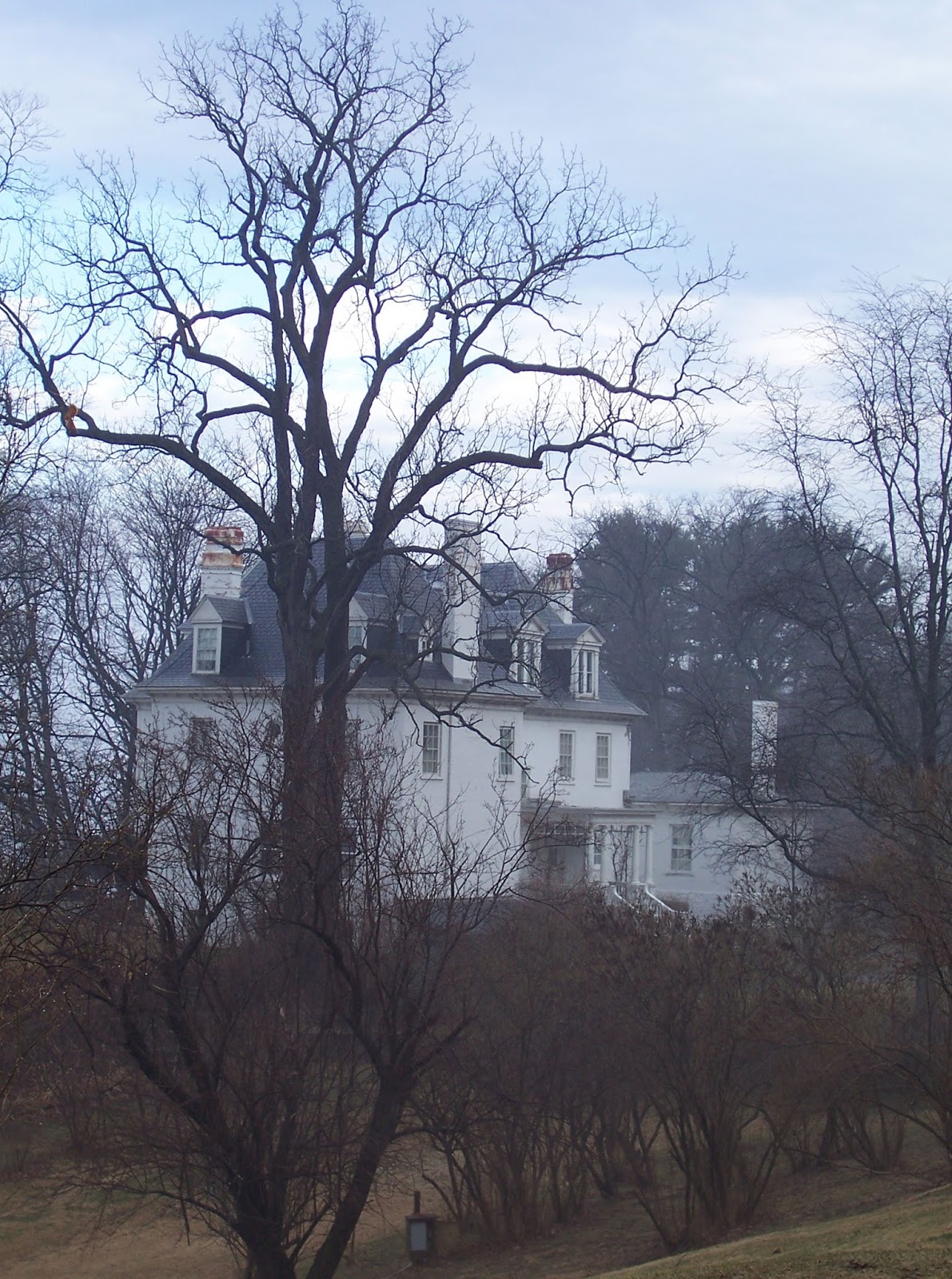
 If you\’ve been here, you\’ve seen; you just might not realize it. Clermont is home to one of the oldest black walnut trees in New York State. Depending on who you talk to you, it might be the oldest, the second oldest, or possibly the third oldest.
Either way–it\’s old! It\’s been estimated that it\’s somewhere around 240 years old, which means it was a little sapling when Margaret Beekman Livingston was watching her house get rebuilt in 1778.
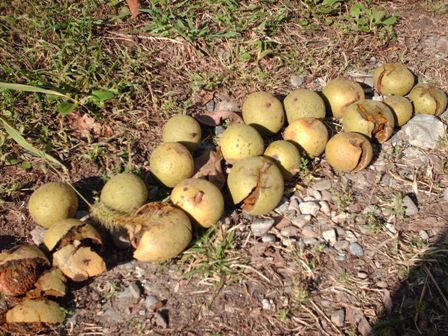 This monster of a tree reaches its craggy branches up over the towering roof of the mansion\’s South Wing, offering shade in the summer, and dropping great big green-coated walnuts down from the sky every fall (Honoria used to wear a hard hat near there when she got older to protect her head!). It is natural landmark and one of the first things you see when you come walking down the Lilac Walk on your way to the house. It\’s a bit of a natural wonder to stand at the foot of it and realize how very big it really is.
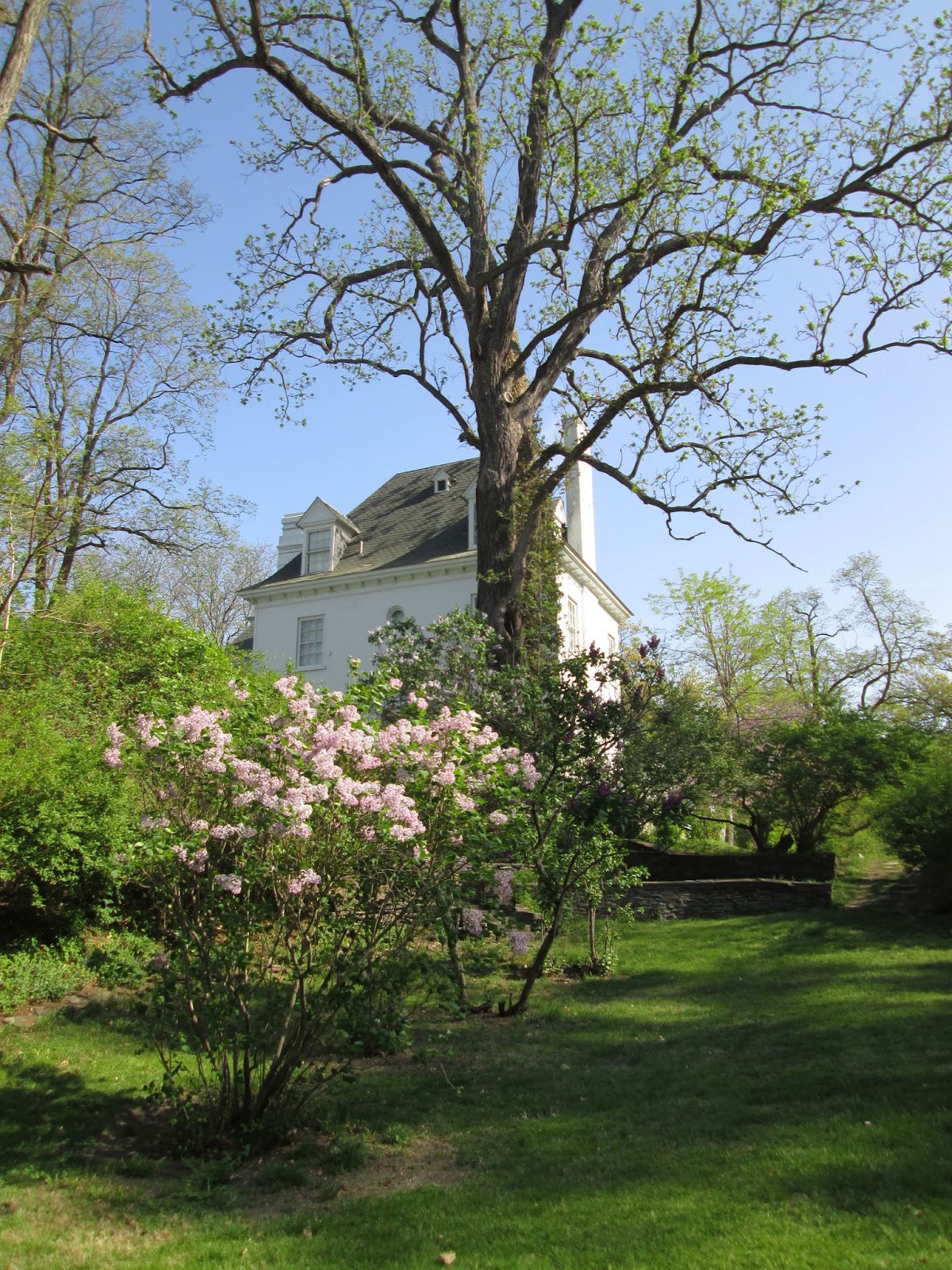 We love this tree. But it\’s a living thing, and well–it\’s getting old. Almost every year, we have the tree examined by arborists to ensure that it is still safe, and we know that it\’s life is running out. The time will come when the tree will have to be removed for safety\’s sake.
Thinking about this made me think about looking for the tree in historic documentation. What history can you find about a tree?
The easiest image to spot was this one from around 1908 to 1910. Alice photographed her newly-turned patch of dirt that would become the Spring Garden, and there is our old friend the Black Walnut. Even over 100 years ago, it is tall enough to tower above 5 stories of house (since it sits on level with the basement).
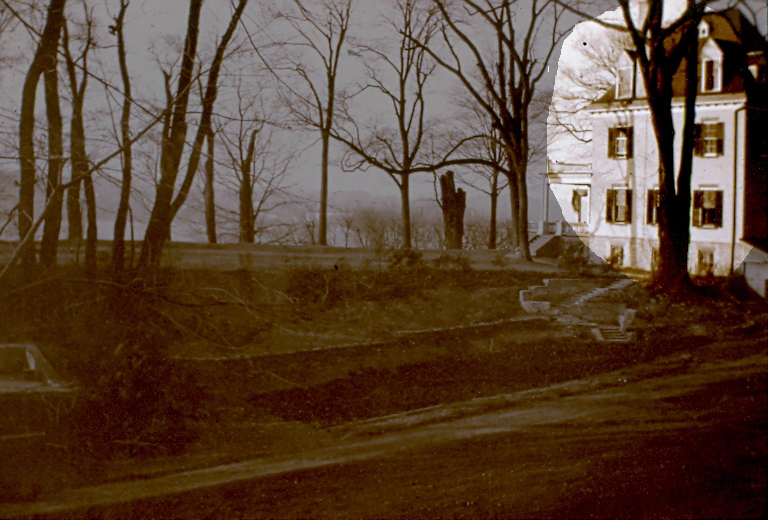
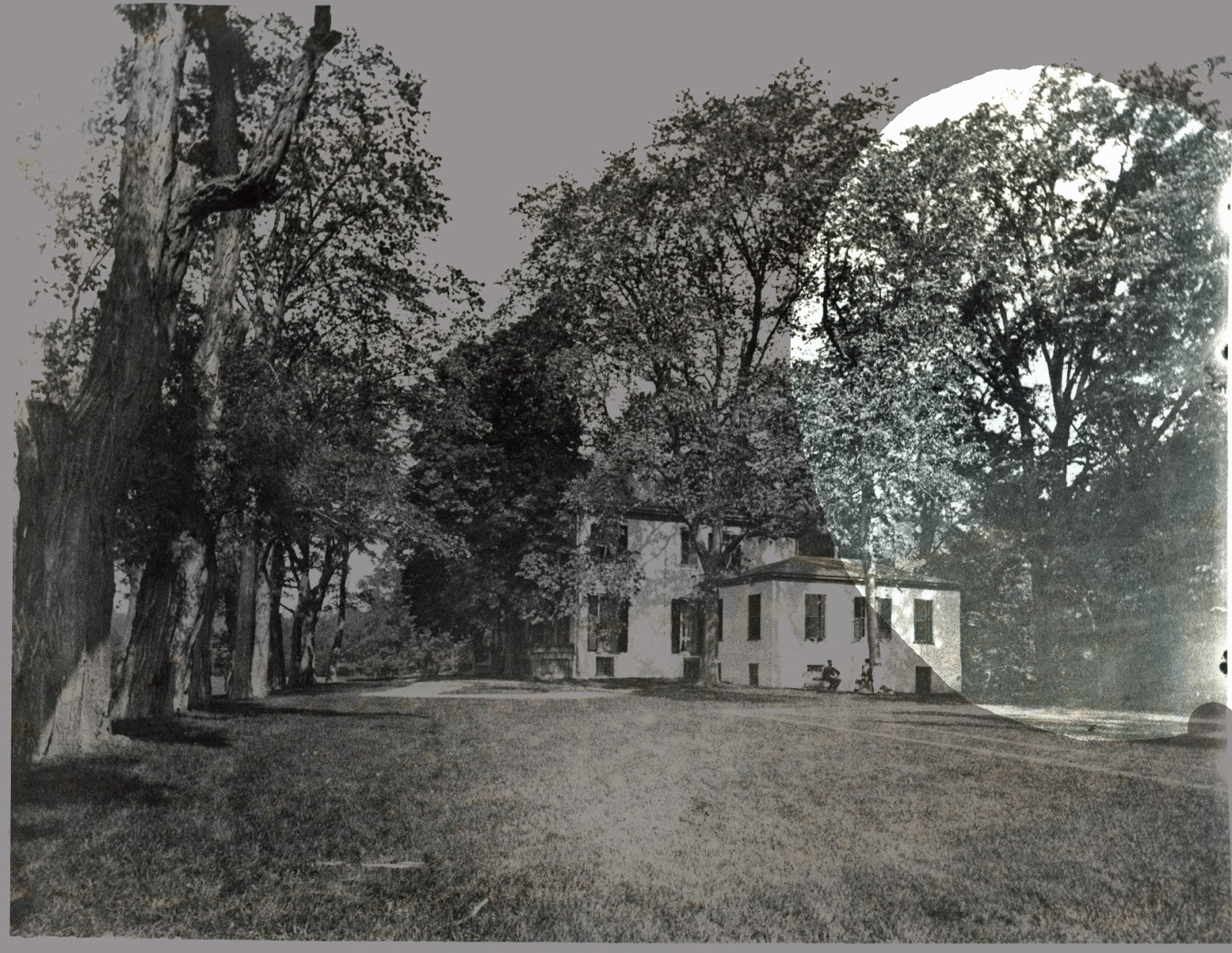
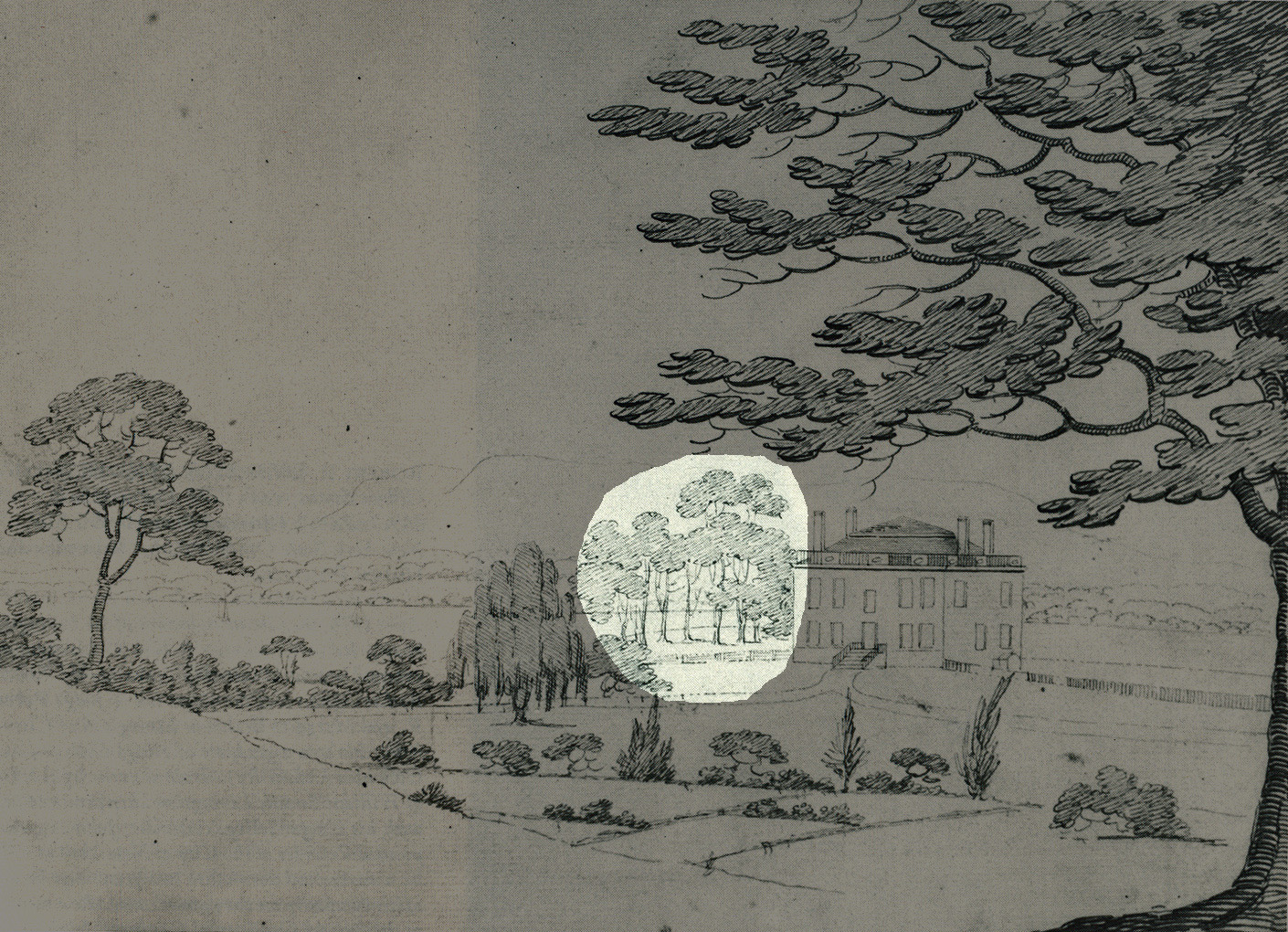
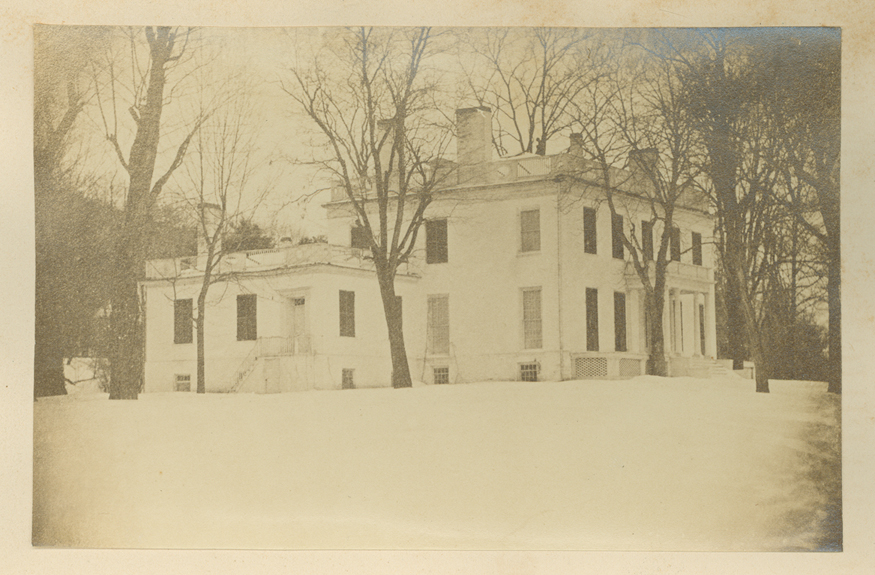 Now we are treading into territory where photographs are few. The only photo I have of the house in the 1860s id from the wrong angle, and you can\’t see the tree at all. Nevertheless, if you\’re will to trust a drawing, there is an image from around the same time that may show the black walnut, tall and proud off the southern corner of the house. In the 19th century, it was clearly old, but not quite the Grande Dame that it is now.

 Clermont State Historic Site
Leave a comment