
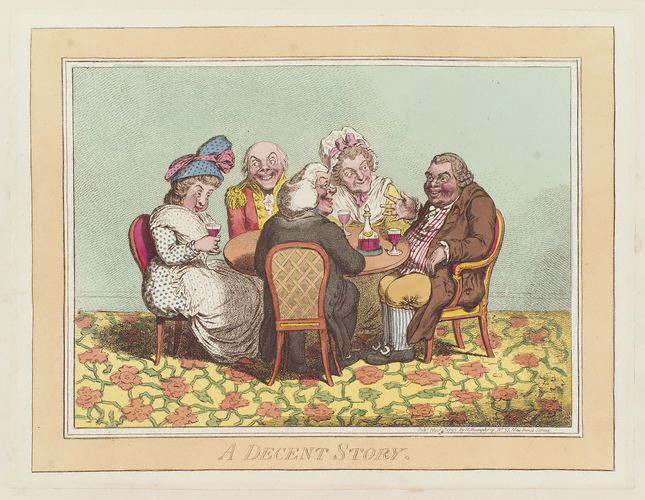
 Alida Livingston\’s concerns were well placed, and by 1713 Robert Livingston, Jr. had moved to New York where his penchant for \”things genteel\” could be better indulged. Robert Livingston, Sr. wrote his wife on 4 April 1713 that \”Robert has no customers, but [has] wasted a lot of money on clothes, board, room-rent, etc. It may last till June, then he\’ll have to come to the plantation.\” Several days later he wrote Alida again to tell her that their son would soon be on his way to the Manor to recuperate from a groin injury. Robert, Sr. lamented, \”Our son has cost a lot here, but [has] accomplished little or nothing. A 7 lb. wig in these times is unbearable. He does not consider it, however\”
 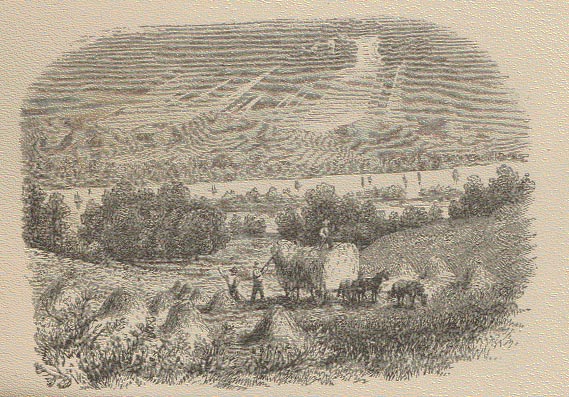 The tenants of Livingston Manor supplied the proprietors with several days labor each year for road-building and other projects essential to the development of the Livingston landholdings. In addition, they paid an annual rent consisting of wheat, other grains and fowl. The Livingstons also profited from the grains retained by the tenants, which had to be ground at the Manor\’s gristmills, as well as by the sale of finished goods at the Manor\’s store. It was the operation of these varied commercial interests that occupied the younger Robert Livingston during the period 1713 to 1717.
  It would appear that marriage did little to change Robert Livingston, Jr.\’s nature after all. His law practice never got off the ground and he once again entered the world of commerce. Here, too, he exhibited an indolence and carelessness that forced his exasperated father to declare in 1722 \”…our son Robert is not willing to pay a single skivver for house-rent, so that I am at odds everywhere. He is very ungrateful and wants to extort everything from me, but his hopes will be deceived and it will not be to his profit.\” Despite the strain that existed between parents and child, Robert Livingston, Jr. eventually did profit. The first Lord of Livingston Manor died on 1 October 1728; Alida Livingston died five months later. Robert and Alida\’s eldest son, John, had died in 1720, and so the bulk of the Manor, approximately 141,000 acres, was inherited by their second son, Philip (1686-1749). Robert, Jr. was not forgotten in his father\’s will. He inherited nearly 13,000 acres of Manor land south and west of the Roeliff Jansen Kill. This tract later came to be called Clermont.
Robert Livingston, Jr. did not immediately take up residence on his country estate. He continued to engage in commerce, perhaps with more diligence now that he no longer had his father\’s fortune to fall back on. By the 1740s, now well into middle age, he decided to retire to his country seat. Now that he had the security of a regular income from his upstate landholdings, or at least the promise of a regular income, he began to make a series of purchases on the \”Great Hardenburgh” Patent, which embraced much of present day Greene, Ulster, Delaware and Sullivan Counties. He eventually acquired nearly 500,000 acres in the wild and mountainous terrain west of the Hudson River. Livingston\’s speculation in Catskill Mountain lands across the river from the house he began to construct circa 1750 probably inspired the name he chose for his estate.

Livingston family tradition holds that Robert first proposed to name his estate \”Callendar\”, after a Livingston estate in Scotland (shown at left), but was dissuaded from doing so by his brother Philip, who thought the notion presumptuous. It is documented that Robert\’s 13,000 acre estate was called \”Ancram\” by the early l740\’s, the same name Philip Livingston chose for his iron- manufacturing settlement on the Manor. Sometime between 1745 and 1755 Robert settled on the name \”Clare Mount,\” or \”clear mountain.\” The name was later shortened to \”Claremont\” and, after the outbreak of war with England, some family members begin to spell the estate\’s name in the French manner: \”Clermont.\”
Margaret Howarden Livingston died in December 1758 and was interred in a burial vault constructed 200 yards north of the Livingston family home at Clermont. After his wife\’s death Robert of Clermont, as he was now known, settled into a comfortable retirement, surrounded by his books and a growing brood of grandchildren. His granddaughter, Janet, wrote of him many years later, \”[He] always rose at five in the morning and read without ceasing until near breakfast. The year before his death he learned the German tongue, and spoke it fluently.\” A grandson, Edward Livingston, described Robert of Clermont at age 84: “Never was a man better entitled by his manners, his morals, and his education to the appellation of gentleman…He marked the epoch at which he retired from the world by preserving its costume: the flowing well-powdered wig, the bright brown coat, with large cuffs and square skirts, the cut velvet waistcoat, with ample flaps, and the breeches barely covering the knee, rolled over them with embroidered clocks, and shining square toed shoes, fastened near the ankle with small embossed buckles. These were retained in his service, not to affect a singularity, but because he thought it ridiculous, at his time of life, to follow the quick succession of fashion.”
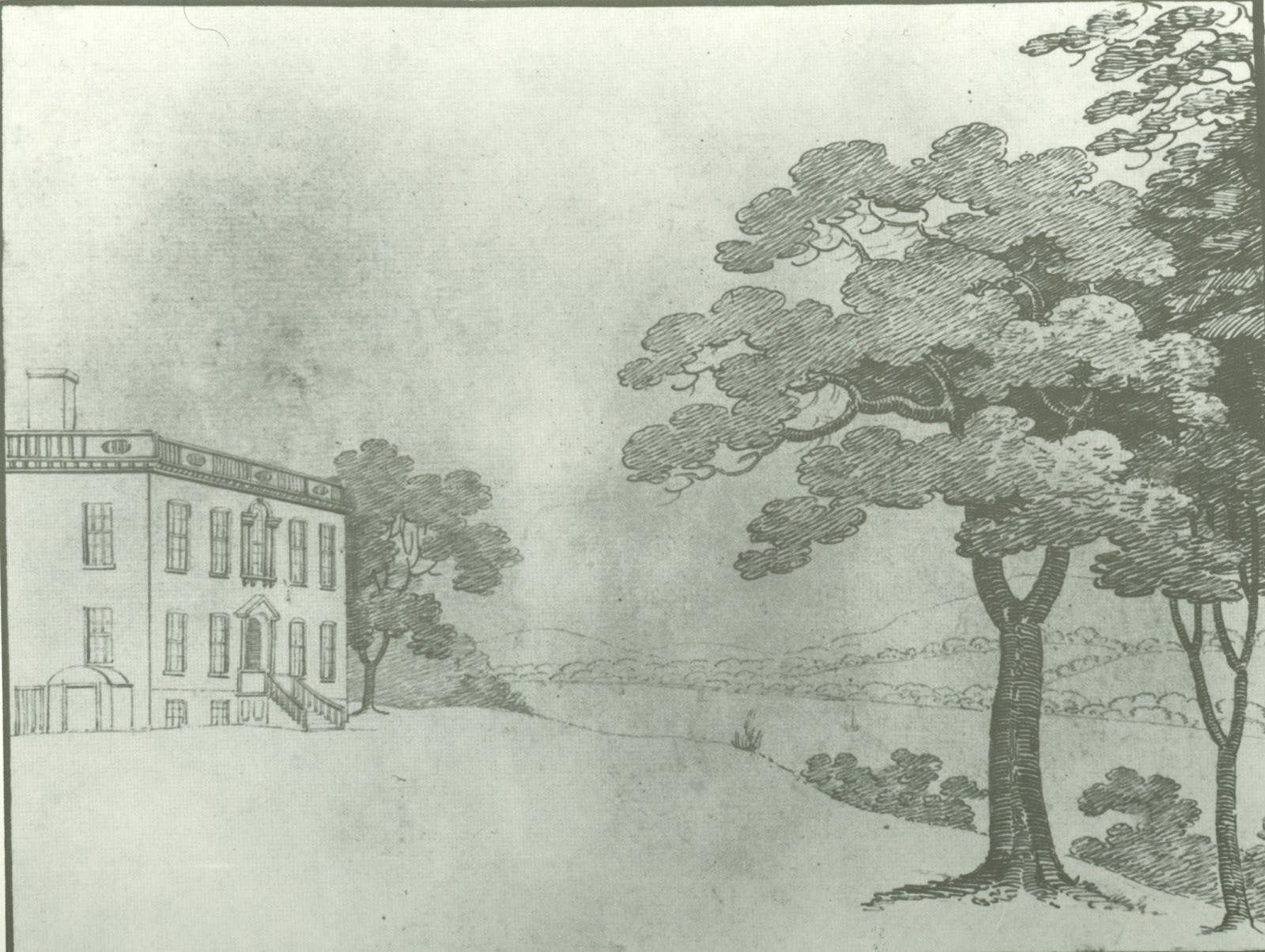
In his grandchildren\’s remembrances of the elderly Robert of Clermont, the bright, witty boy who yearned for \”things genteel\” can still be seen. The patriarch of Clermont was in many ways the spoiled younger son of the self-made man. A failure in the law, in business, and in the eyes of his own parents, he nonetheless entered his final years with the satisfaction that he had not only maintained the estate passed on to him by his father, but had increased it 40-fold through his speculation in Catskill Mountain lands. He could take satisfaction, too, in the success of his only child, Robert R. Livingston, who was as industrious as the father was indolent and who had few equals among the legal profession in the Province of New York.
Robert of Clermont died at his home on 27 June 1775, shortly after hearing of the skirmish between British regulars and American militiamen at Lexington and Concord. He was buried with his wife in the family vault at Clermont.
 Clermont State Historic Site
Leave a comment