I got a request from a friend to share a little bit more about early gardens at Clermont. While not a lot of records exist about the earliest plantings, I do have Clermont Livingston\’s garden journal to help me on my way. I hope this is what you were looking for Tina!
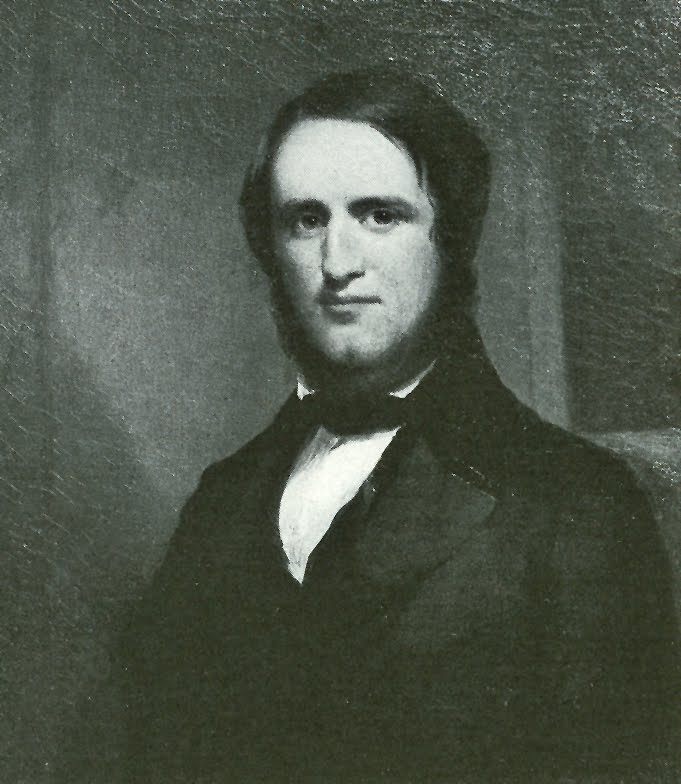 While some journals make for good beach reading (Nancy Shippen Livingston\’s journal, for instance, reads a bit like a romance novel or an Oxygen network movie), many record the days in the sparsest assortment of words that can get little mind numbing. Some record little more than just the weather!
Clermont Livingston\’s journal, which runs from 1856-1880, at first seems to be barely more than a weather journal. November 28, 1856–\”First snow of the season.\” February 23, 1857–\”The ice still jambed up in front of this place.\” But as spring warmed up, Clermont finally had something to talk about: his farm.
 The estate was a working farm in those days. Apples from the orchard were boxed and sold, and what appears to have been fairly large vegetable and fruit gardens in addition to a green house and more orchards supplied food to Clermont Livingston and his two children: Mary (b. 1842) and John Henry (b. 1848).
This was not an uncommon practice. Food from the gardens at Olana was proudly served by Frederick Church to his visitors (in addition to more exotic imported foods like bananas). and other neighboring estates also supplied their summer kitchens with the foods they grew themselves on their vast acerages.
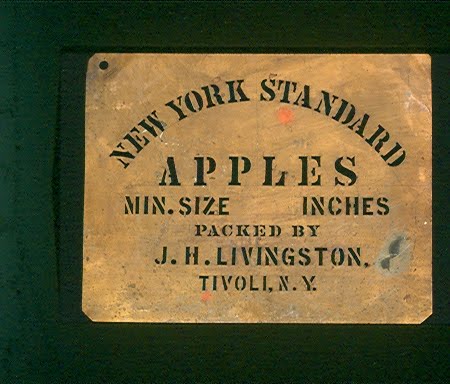 So what foods came from our gardens? I\’ve already touched on the orchards. Clermont grew 12 different kinds apples. Apples were a valuable fall crop in part because the fruit could be eaten throughout the winter and even into the leanest times of early spring.
 In 1861 Clermont sold 67 barrels to New York City (shipped from the dock at the foot of our bluffs) or nearby residents. Eighteen and and one yhalf barrels were \”reserved for winter use,\” while still more were pressed for cider, which took one farm hand about a month to complete. Some apples were also pickled and still more were sold down to New York City in January of that winter.
But the orchards yeilded more than just apples. Each spring Clermont noted when his various trees blossomed, the prospect of sweet, juicy fruit enough to make his imagination wander. \”Cherries & Peaches & pears in blossom. Fine prospect of fruit,\” he wrote on May 5, 1862. Three varieties of pears were amongst those grown at Clermont, and peaches and a nectarine tree were mentioned once being forced into bloom in the greenhouse in January! The apricots were among the earliest spring blossoms and were mentioned specially most years. Plums, which had been grown at Clermont since the eighteenth century were also a favorite summer fruit.

Musk melon, or canteloupe, were also worthy of plenty of anticipation. Not only did Clermont note when he planted them annually, he soemtimes even took note of them ripening in the garden. I can just picture him eagerly palming the fruit on the vine, hoping it would be ready to eat soon. This warm-weather plant was (along with several others) sometimes forced in a glass-over hot bed while the outside weather was still cold to facilitate its successful ripening. In verious years he also aparently experimented with other melons to accompany these: Nut Meg, cetron, Japan, and water melons are all mentioned.
 Clermont\’s vegetable crops were nothing to sneeze at either. Like the fruit, these could be pushed into early bloom by planting them in hotbeds. This was an important technique since in April, the winter stores were running out (or simply becoming miserably monotonous) and spring crops would not otherwise be ready to eat for months to come. Tomatoes, \”salad,\” spinach, eggplant, radishes, squashes, and celery all found themselves at home in hot beds in various years.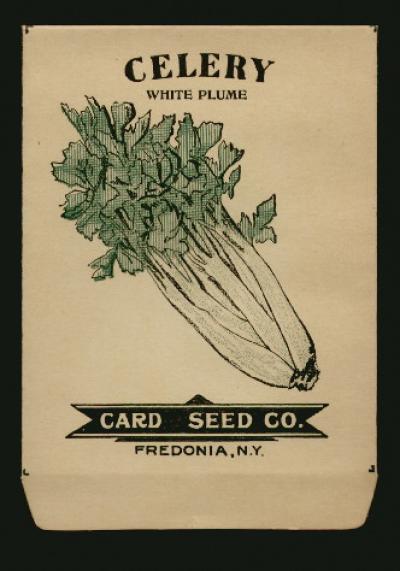
Celery was still a slightly exotic food in the mid nineteeth century, and special serving dishes, shaped like vases, were made to show it off on a well-set table. I imagine having it fresh at Clermont was a small point of pride for a man who spend so much of his time and energy on gardening.
 And what sort of dinners did all this food yeild? Diets were increasingly varied for those who could afford it in the 19th century, and it would have fallen to the auspices of the cook to ensure that the Livingston\’s tastes were satisfied. Did Sarah Joseph Hale\’s recipees for squash pies ever find their way onto young John Henry\’s dessert plate? Did any of those strawberries end up in a strawberry shortcake?
 Clermont State Historic Site
Leave a comment