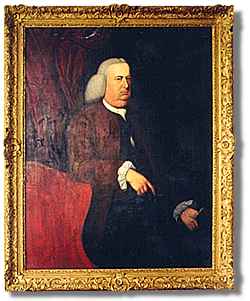
 In honor of the approach of Indpendence Day, I think it is time we paid a little tribute to the Livingston who signed the Declaration of Independence.


They built a country estate out in Brooklyn, and he did all the things that a civic-minded wealthy man should do in the eighteenth century: he served as an alderman for the city and speaker in 1768. When the taxes of King George began gnaw at certain colonial residents, Philip was quick to speak out. He was a leading voice against the Stamp Act at the Provincial Assembly in 1765, and he was elected to the Continental Congress in 1774. He returned in 1776, leaving behind business and family in an increasingly unsteady environment, for the Second Continental Congress (you can read his correspondance from this time at the Library of Congresss website if you search his name).
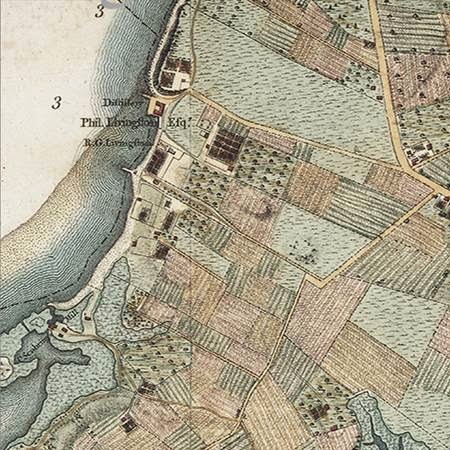
The mansion he left behind was situation well enough to serve the Continental Army, where Washington used it as his headquarters for a time that year. The English liked the house too; they later used it as a hospital for the Royal Navy.
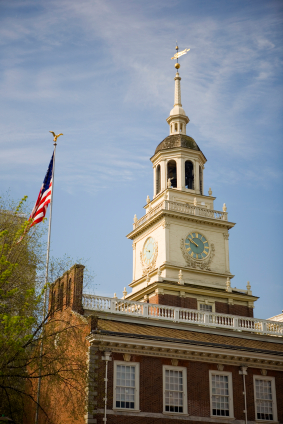 But in 1778 Philip was sick–too sick in his opinion, or maybe his family\’s, to rejoin Congress in central Pennsylvania. Having fled Philadelphia after Washington\’s defeat at Brandywine, Congress huddled a few days west in York, Pennsylvania, far from the more commodious accomodations they had been enjoying before. Governer Clinton of New York would give Philip no rest however, and believing him vital to the situation, urged him to make the perilous journey through contested territory to join with the rest of Congress there. (You can learn more about York County, PA history at their blog here)
The trip was exhausting. Several days on horseback with a single companion to give him support took their toll on Philip. Settling down at the villiage inn, he joined in the celebrations on May 4th when the group received news that France would be joining their side in the war–finally some good news! But Philip\’s health could not take the trip. Realizing the seriousness of his condition, Philip drew up his will in a hurry, and several of his fellow delegates made trips to his bedside to offer their wishes. Three delegates were well-respected physicians, and they did everything that 18th century medicine could do for a dieing man. But in the end, Philip succumed there in York.
 When Trumbull imagined the scene of the signing of the Declaration of Indpendence and made this painting some 40 years later, he stuck Philip way out on the right-most edge of the painting where he would be forever find himself cropped off the two dollar bill and out of many internet images.
 Clermont State Historic Site


Leave a comment